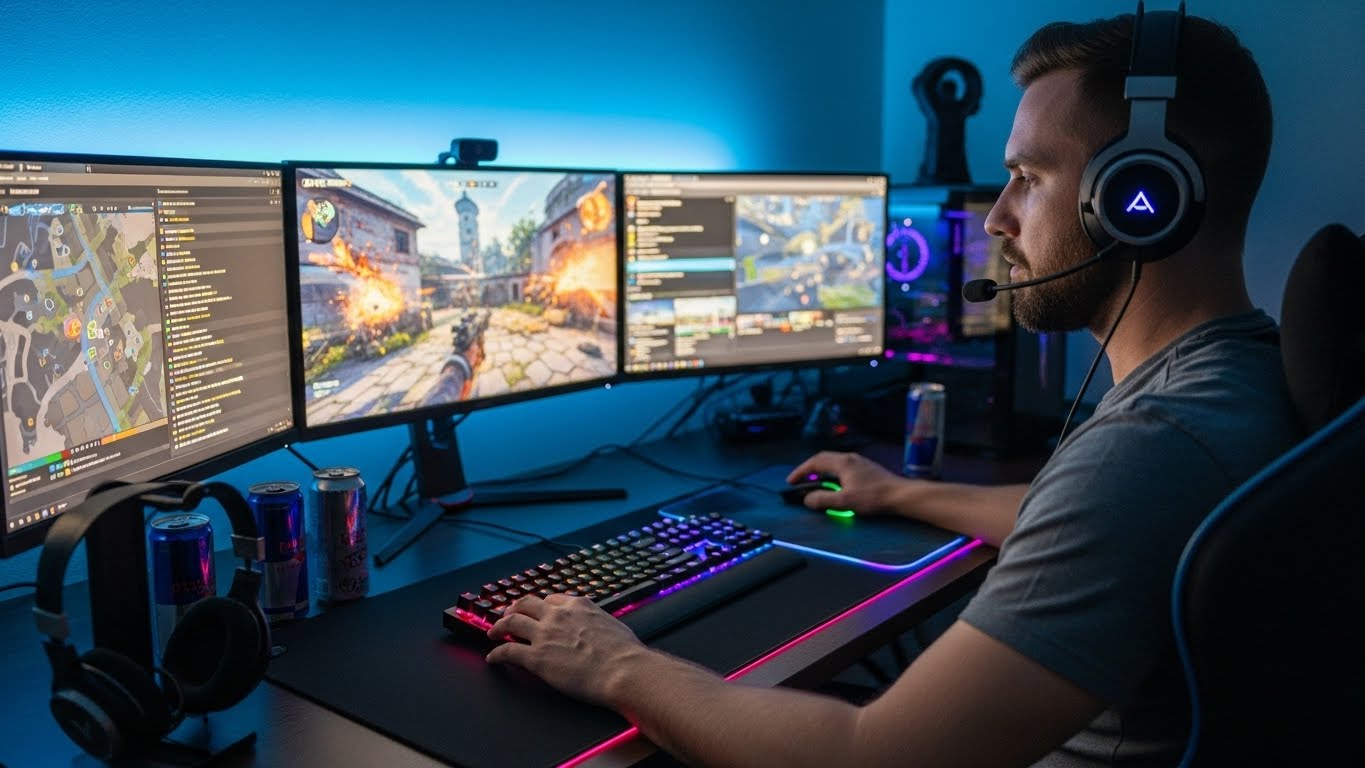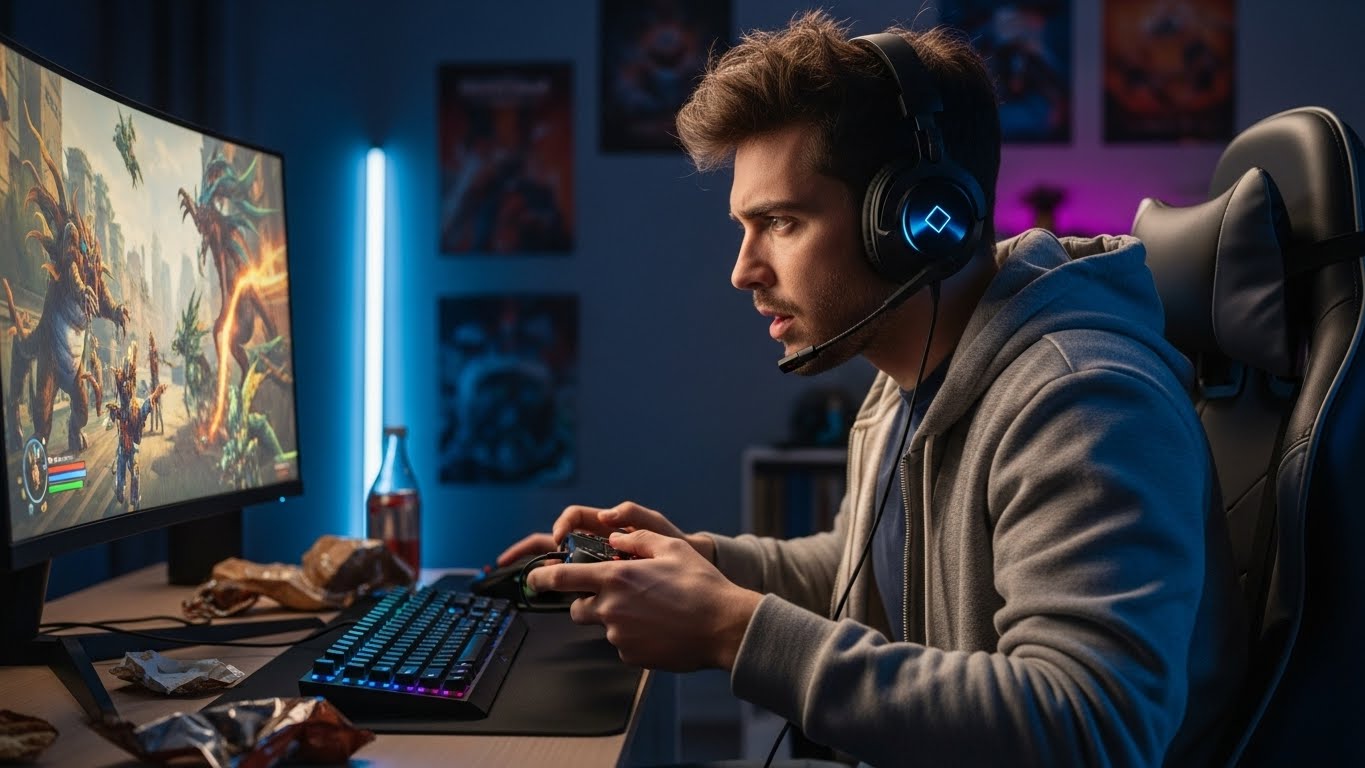

Gaming has transformed from a simple pastime into one of the most powerful and influential industries in the modern world. What was once a niche hobby for a select group of enthusiasts has evolved into a global phenomenon that influences art, technology, education, and culture. Today, gaming is not just about entertainment; it is a lifestyle, a profession, and a gateway to new realities. This blog explores the evolution of gaming, its impact on society, and what the future holds for this dynamic world.
The Origins of Gaming: From Pixels to Passion
The origins of gaming date back to the mid-twentieth century, long before high-definition graphics and immersive storylines. In the 1950s and 60s, researchers and computer scientists began experimenting with basic forms of digital entertainment. Games like “Tennis for Two” and “Spacewar!” were the foundation of what would become a massive global industry. These early experiments were created on computers that filled entire rooms, yet they sparked a revolution in how humans could interact with technology.
The 1970s introduced the first commercial video games. “Pong,” released by Atari in 1972, became the first arcade hit, introducing millions to the concept of interactive electronic entertainment. The simplicity of Pong, with its bouncing ball and two paddles, proved that people were eager for this new form of fun. Soon after, the home console market began to take shape with the release of systems like the Magnavox Odyssey.
The late 1970s and early 1980s marked the golden age of arcade gaming. Titles like “Pac-Man,” “Space Invaders,” and “Donkey Kong” filled arcades and captured the imagination of players around the world. For the first time, gaming became a social experience, with people gathering in arcades to compete, share strategies, and chase high scores.
The Rise of Home Consoles and the First Gaming Boom
As technology advanced, gaming shifted from arcades to living rooms. The 1980s saw the rise of home consoles like the Nintendo Entertainment System (NES) and the Sega Master System. These consoles revolutionized how people consumed games. No longer confined to public spaces, players could now explore virtual worlds from the comfort of their homes.
Nintendo became a household name, introducing iconic characters such as Mario, Link, and Samus. These characters were more than just pixels on a screen; they were cultural icons that shaped childhoods and defined a generation. Games like “Super Mario Bros.” and “The Legend of Zelda” demonstrated that gaming could combine storytelling, challenge, and creativity in ways that traditional entertainment could not.
At the same time, computer gaming began to develop alongside console gaming. Personal computers opened new opportunities for creativity and complexity. Games like “King’s Quest” and “Ultima” offered deep stories and vast worlds that were unimaginable on consoles at the time. The PC would go on to become a hub for genres like strategy, simulation, and role-playing.
The 1990s: The Era of 3D and Innovation
The 1990s were a turning point in gaming history. It was the decade that brought color, depth, and realism to games. The jump from 2D to 3D changed everything. Consoles like the Sony PlayStation, Nintendo 64, and Sega Saturn introduced players to new forms of gameplay and immersion.
The PlayStation, in particular, became a game-changer. With CD-based storage, developers had more space to include cinematic cutscenes, complex audio, and larger worlds. Games like “Final Fantasy VII,” “Metal Gear Solid,” and “Resident Evil” set new standards for storytelling and production quality. The era also gave rise to new genres such as survival horror and open-world adventure.
Meanwhile, multiplayer gaming started to evolve in new directions. LAN parties and split-screen modes allowed friends to compete or cooperate in real time. Franchises like “GoldenEye 007” and “Quake” popularized first-person shooters, paving the way for future competitive gaming and esports.
The 2000s: Online Worlds and the Age of Connectivity
The new millennium ushered in an era of connectivity. With the rise of the internet, gaming entered a new age where players could interact across continents. Online gaming redefined social interaction. Games like “World of Warcraft” and “Counter-Strike” turned virtual worlds into living, breathing communities. Players were no longer limited to their local friends; they could now join millions of others in vast online universes.
The 2000s also saw the birth of some of the most influential gaming franchises in history. “Halo,” “Grand Theft Auto,” and “The Sims” demonstrated the diversity of gaming experiences available to players. Whether battling aliens, exploring open cities, or building virtual lives, gaming provided a sense of freedom that no other medium could match.
Technology advanced rapidly during this time. Graphics became more realistic, sound design more immersive, and storytelling more sophisticated. The introduction of high-definition visuals and advanced consoles like the PlayStation 3 and Xbox 360 brought cinematic quality to games.
Mobile gaming also began to emerge in the 2000s, changing how and where people played. Simple titles like “Snake” on Nokia phones laid the groundwork for what would later become a massive market. Gaming was no longer limited to consoles or PCs; it was becoming a part of daily life.
The 2010s: Gaming Becomes Mainstream
By the 2010s, gaming was no longer a subculture; it was mainstream entertainment. The rise of smartphones and app stores made games more accessible than ever before. Titles like “Angry Birds,” “Candy Crush,” and “Clash of Clans” reached millions of players around the globe.
At the same time, traditional gaming continued to evolve. Massive franchises like “Call of Duty,” “Assassin’s Creed,” and “The Witcher” set new standards for scope and storytelling. Open-world games became more detailed and lifelike, allowing players to shape their own adventures.
The rise of online streaming platforms transformed gaming into a spectator sport. Services like Twitch allowed players to broadcast their gameplay to audiences worldwide. Watching games became as popular as playing them. This new form of entertainment gave rise to gaming celebrities and influencers who could command millions of followers.
Esports, once a niche hobby, became a global industry. Professional players competed for millions in prize money, and arenas filled with fans cheering for their favorite teams. Games like “League of Legends,” “Dota 2,” and “Counter-Strike: Global Offensive” built communities that rivaled traditional sports in scale and passion.
Gaming also became more inclusive during this decade. Indie developers used digital distribution to reach audiences without relying on major publishers. Titles like “Undertale,” “Celeste,” and “Stardew Valley” proved that creativity and heart could rival big-budget productions. These smaller games brought unique stories and emotional experiences that touched millions of players.
The Artistic Evolution of Gaming
Gaming has often been debated as to whether it qualifies as art. Today, that debate is largely settled. Modern games blend narrative, visual design, music, and interactivity to create experiences that rival cinema and literature. Titles like “Journey,” “The Last of Us,” and “Red Dead Redemption 2” demonstrate the artistic potential of the medium.
Games allow players not only to observe a story but to participate in it. This interactivity creates emotional connections that traditional art forms cannot replicate. A player’s choices can shape the world, determine outcomes, and leave a personal imprint on the experience.
Moreover, gaming has become a canvas for diverse voices and perspectives. Developers from around the world use games to tell stories rooted in their cultures, experiences, and imaginations. This growing diversity has enriched the medium, expanding its emotional and intellectual reach.
The Psychological and Social Impact of Gaming
Gaming’s impact extends beyond entertainment. It influences the way people think, learn, and interact. Studies have shown that gaming can enhance cognitive abilities, improve problem-solving skills, and foster creativity. Strategic and simulation games encourage critical thinking, while cooperative games promote teamwork and communication.
Gaming also offers emotional benefits. For many, games provide an escape from stress and a source of joy and achievement. Online communities can create friendships and a sense of belonging, especially for those who may feel isolated in real life. Games can even help players cope with anxiety, grief, or depression by providing a safe space for expression and exploration.
However, gaming is not without its challenges. Concerns about addiction, excessive screen time, and online toxicity have sparked important conversations about balance and responsibility. The industry and communities continue to evolve to promote healthy gaming habits and positive environments.
The Role of Technology in Shaping Modern Gaming
Technology has always been at the heart of gaming’s evolution. From the first pixelated screens to today’s hyper-realistic graphics, innovation drives the industry forward. The rise of powerful processors, artificial intelligence, and advanced graphics engines has created worlds that blur the line between the real and the virtual.
Virtual Reality (VR) and Augmented Reality (AR) are among the most exciting developments of recent years. With VR headsets, players can step inside games, experiencing them from a first-person perspective. AR, on the other hand, brings digital elements into the physical world, as seen in titles like “Pokémon Go.”
Cloud gaming is another revolutionary shift. Services now allow players to stream games without needing high-end hardware. This technology makes gaming more accessible, removing barriers of cost and complexity. It represents the future of convenience, where the power of gaming is available anywhere with an internet connection.
Artificial intelligence is also reshaping gaming. Smarter AI opponents, dynamic storytelling, and adaptive gameplay create more personalized experiences. Games can now react to a player’s choices in real time, making every session unique.
Gaming as a Profession and Industry
What was once dismissed as a hobby is now a viable career path. Game development, streaming, esports, and content creation have opened new professional opportunities. Developers, designers, artists, and writers collaborate to bring virtual worlds to life.
Esports players train as rigorously as athletes, with teams, sponsors, and tournaments that attract millions of viewers. Streamers and YouTubers build careers by sharing their gameplay and personalities with audiences worldwide. The gaming economy supports millions of jobs across various sectors, from marketing to technology to education.
The industry’s financial growth is staggering. Today, gaming generates more revenue than the film and music industries combined. Its influence extends beyond entertainment into fashion, technology, and social media. Major companies and investors recognize gaming as a central pillar of modern culture.
The Future of Gaming: A New Reality
Looking ahead, gaming’s future is filled with possibilities. Advances in artificial intelligence, quantum computing, and immersive technologies promise experiences beyond imagination. The boundary between physical and digital will continue to blur as metaverse concepts evolve.
In the coming years, players may not just play games—they may live within them. Persistent online worlds could mirror real societies, complete with economies, politics, and social systems. The line between gamer and creator will fade as tools for user-generated content become more sophisticated.
Ethics and inclusivity will also play crucial roles in shaping this future. Developers will need to consider how games affect behavior, identity, and culture. Responsible innovation will ensure that gaming remains a force for creativity and connection.
Sustainability will become another major focus. As technology advances, so does the need for energy-efficient systems and environmentally friendly production. The industry has the power to lead by example, merging entertainment with ecological awareness.
The Cultural Power of Gaming
Gaming has transcended borders, languages, and generations. It has become a shared global culture, uniting people through stories, competition, and creativity. From small children learning through educational games to seniors using games to stay mentally active, it touches lives at every stage.
Esports events fill stadiums. Game soundtracks win awards. Characters from games appear in films, fashion, and art. Gaming conventions attract millions of fans from every corner of the world. What was once considered niche is now a universal language.
Perhaps the most powerful aspect of gaming is its ability to bring people together. In an increasingly divided world, games offer shared spaces where collaboration, imagination, and empathy thrive. Whether it’s two friends teaming up for a quest or strangers from different countries building something together online, gaming reminds us of our shared humanity.
Conclusion: Gaming as the Ultimate Human Experience
Gaming is more than just pixels, code, and controllers. It is a reflection of human imagination, ambition, and emotion. From its humble beginnings in research labs to its place as the world’s largest entertainment medium, gaming has continually evolved alongside us. It mirrors our creativity, our challenges, and our dreams.
Every era of gaming tells a story—not only of technology but of people. It tells of those who dared to innovate, those who played for joy, and those who built communities that span the globe. Gaming is not just the future of entertainment; it is the future of storytelling, art, and connection.
As we look ahead, one thing is certain: gaming will continue to evolve, inspire, and unite. It will challenge our minds, ignite our imaginations, and remind us that in every game, we discover a little more about ourselves.