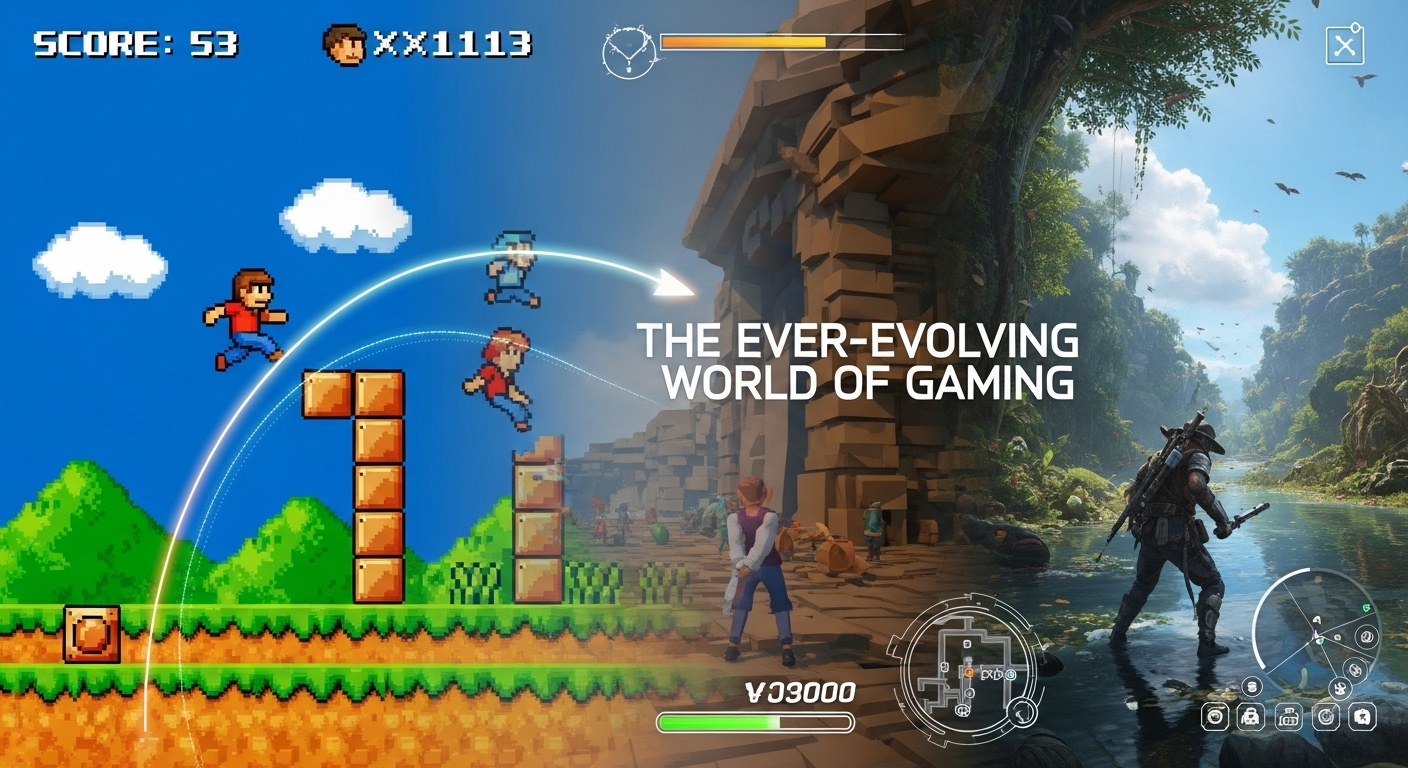
Gaming has evolved from a simple pastime into one of the most influential cultural forces in the modern world. What was once a niche hobby enjoyed by a small group of enthusiasts has grown into a global industry worth hundreds of billions of dollars. The journey of gaming—from the arcade cabinets of the 1970s to the immersive virtual reality experiences of today—is a story of technology, creativity, and community. It is also a reflection of how entertainment adapts to the human desire for exploration, challenge, and connection.
The Birth of Video Games
The concept of gaming did not start with consoles or computers. Long before technology allowed digital play, humans found joy in games like chess, dice, and card games. However, the idea of electronic gaming began to take shape in the mid-20th century. Early experiments like “Tennis for Two” and “Spacewar!” were created in the 1950s and 1960s by computer scientists exploring what was possible with emerging technology.
The first commercially successful video game, “Pong,” was released in 1972 by Atari. It was incredibly simple—a digital version of table tennis—but it captured the imagination of the public. Arcades became social hubs where players gathered to compete for high scores. The era of electronic entertainment had begun, and soon every company wanted to enter the market.
The Rise of Home Consoles
As technology advanced, video games moved from arcades into living rooms. The 1970s and early 1980s saw the rise of home consoles like the Atari 2600, which brought gaming into the mainstream. For the first time, people could play games on their televisions, changing how entertainment was experienced. Titles such as “Space Invaders” and “Pac-Man” became cultural phenomena, influencing music, fashion, and even film.
However, the early gaming boom faced challenges. By 1983, the market became saturated with poorly made games, leading to what is known as the “Video Game Crash.” Many thought gaming was a passing fad. That changed when a Japanese company, Nintendo, entered the market with the Nintendo Entertainment System (NES) in 1985. With iconic franchises like “Super Mario Bros.” and “The Legend of Zelda,” Nintendo restored public confidence and established the blueprint for future gaming success.
The 16-Bit Revolution and the Console Wars
The late 1980s and early 1990s marked a new era: the 16-bit generation. Nintendo’s Super Nintendo Entertainment System (SNES) and Sega’s Genesis (Mega Drive) competed fiercely for dominance. This period is often remembered as the first true “console war.” Players passionately defended their favorite systems, and the competition pushed both companies to innovate.
Games became more complex, colorful, and story-driven. Sonic the Hedgehog became Sega’s mascot, representing speed and attitude, while Mario remained the face of family-friendly fun. This rivalry also led to technological advancements in graphics, sound, and gameplay mechanics. Developers began experimenting with new genres, from platformers to role-playing games (RPGs), many of which are still beloved today.
The Arrival of 3D Gaming
The mid-1990s saw one of the most significant leaps in gaming history: the transition from 2D to 3D. With the release of the Sony PlayStation, Sega Saturn, and Nintendo 64, developers gained the ability to create three-dimensional worlds that offered depth and realism never before possible. This technological shift fundamentally changed how players interacted with games.
Titles like “Super Mario 64” and “The Legend of Zelda: Ocarina of Time” set new standards for game design, introducing open environments and camera control systems that shaped future generations of games. Meanwhile, the PlayStation became the platform of choice for mature storytelling, with hits such as “Final Fantasy VII,” “Resident Evil,” and “Metal Gear Solid.” These games blurred the lines between cinema and interactive entertainment, making players feel part of epic narratives.
The Online Revolution
As the internet became accessible to households in the late 1990s and early 2000s, gaming underwent another transformation. Multiplayer gaming, once limited to local play, expanded to global connectivity. PC games like “Quake,” “StarCraft,” and “Counter-Strike” popularized online competition. Console makers followed suit, introducing online features that allowed players to battle or cooperate across continents.
Massively multiplayer online role-playing games (MMORPGs) like “World of Warcraft” created vast virtual worlds where millions of players lived out alternate lives as warriors, wizards, or explorers. These online spaces fostered communities, friendships, and even economies. Gaming was no longer just an individual activity—it became a social phenomenon that connected people worldwide.
The Era of High Definition and Realism
By the mid-2000s, gaming technology had reached new heights with the advent of high-definition graphics. Consoles like the Xbox 360, PlayStation 3, and Nintendo Wii redefined what was possible in visual fidelity and motion control. Developers pushed hardware to its limits, creating cinematic experiences that rivaled Hollywood productions.
This was also the era when indie game development began to flourish. Platforms like Steam allowed small teams to publish their own creations, leading to a wave of innovation and creativity. Games such as “Minecraft,” “Braid,” and “Undertale” proved that passion and ideas mattered as much as big budgets. The gaming community began to embrace diversity in both storytelling and gameplay.
Mobile Gaming and Accessibility
The rise of smartphones changed the gaming landscape yet again. Suddenly, gaming was in everyone’s pocket. Titles like “Angry Birds,” “Candy Crush,” and “Clash of Clans” reached audiences far beyond traditional gamers. Mobile gaming introduced a new demographic to the world of play, including people who had never owned a console or PC.
The accessibility of mobile games also encouraged developers to design experiences that were simple yet addictive. While some criticized the rise of microtransactions and free-to-play models, there was no denying that mobile gaming had democratized the industry. It made gaming more inclusive, breaking down barriers between casual and hardcore players.
Esports and the Rise of Competitive Gaming
What began as friendly competition among players evolved into a global spectacle known as esports. Professional gaming tournaments now fill arenas and attract millions of online viewers. Games like “League of Legends,” “Dota 2,” “Counter-Strike: Global Offensive,” and “Fortnite” have turned skilled players into celebrities and millionaires.
Esports organizations, sponsorships, and leagues have transformed gaming into a legitimate career path. Universities offer scholarships for esports athletes, and major broadcasters cover tournaments with the same enthusiasm as traditional sports. The line between physical and digital competition continues to blur as gaming establishes itself as a core part of modern entertainment culture.
Streaming and the Age of Content Creation
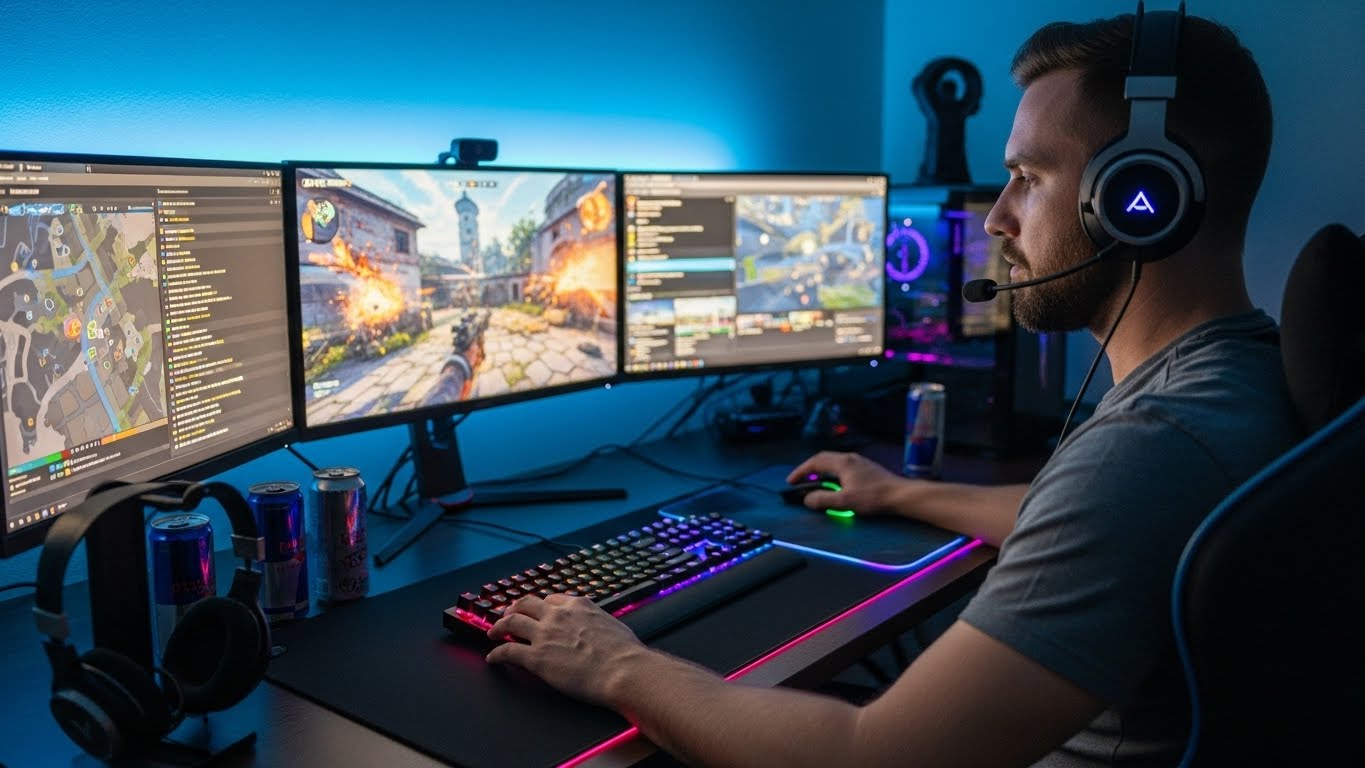
The rise of platforms that allow live streaming and video sharing has reshaped how people experience games. Players are no longer just consumers—they are also creators. Millions of viewers tune in daily to watch their favorite streamers play, comment, or react to games in real time. This has given birth to a new kind of celebrity: the gaming influencer.
Streaming has also created a sense of community between players and audiences. People who may never meet in person can share laughter, excitement, and even personal stories through chat interactions. For many, watching games is now as engaging as playing them. The culture of sharing gameplay highlights and commentary has become a defining aspect of gaming in the digital age.
The Impact of Storytelling in Games
As gaming matured, so did its narratives. Modern video games tell stories that rival those found in literature and cinema. Games like “The Last of Us,” “Red Dead Redemption 2,” and “God of War” explore complex themes such as morality, loss, and redemption. Players no longer simply control characters—they embody them, making choices that influence the story’s outcome.
This interactivity creates emotional engagement that traditional media cannot replicate. Games give players agency, allowing them to shape their own experiences. The blend of narrative depth and gameplay mechanics has elevated video games into a legitimate form of artistic expression. Critics and scholars now discuss games as storytelling mediums worthy of analysis and appreciation.
Virtual Reality and the Future of Immersion
The latest frontier in gaming is virtual and augmented reality. With VR headsets and AR devices, players can step inside the game world and interact with it naturally. This technology represents the culmination of gaming’s desire to create complete immersion. Titles like “Half-Life: Alyx” and “Beat Saber” demonstrate how virtual reality can offer new dimensions of interactivity and realism.
While still developing, VR and AR are expected to play a major role in the future of gaming. As hardware becomes more affordable and accessible, more players will experience these immersive worlds firsthand. Beyond entertainment, the potential applications of gaming technology extend into education, medicine, and training, proving that games can both entertain and educate.
The Social and Cultural Influence of Gaming
Gaming is no longer just a form of play—it is a cultural movement that influences fashion, music, language, and even politics. Characters like Mario, Master Chief, and Lara Croft are recognized around the world. Gaming conventions, cosplay events, and fan communities celebrate creativity and connection across borders.
Moreover, games have become platforms for self-expression and inclusivity. They allow people to explore identities, cultures, and stories that might otherwise remain unseen. Developers are increasingly aware of representation and diversity, creating experiences that reflect a broader spectrum of humanity. The medium’s interactive nature makes it uniquely capable of fostering empathy and understanding.
Challenges and Controversies in the Gaming World
Despite its success, the gaming industry faces ongoing challenges. Issues such as crunch culture, online toxicity, and addiction have raised concerns about the well-being of both developers and players. The debate around loot boxes, gambling mechanics, and monetization models continues to shape discussions about consumer rights.
Representation also remains an evolving topic. While progress has been made in portraying diverse characters and creators, there is still work to be done. Gaming communities are learning to balance freedom of expression with respect and inclusivity, creating spaces where all players feel welcome.
The Power of Community
One of the most remarkable aspects of gaming is its ability to bring people together. Online games and forums have fostered friendships that span continents. Cooperative play encourages teamwork, communication, and empathy. For many, gaming is not just an escape from reality—it is a bridge to meaningful connections.
During challenging times, such as global crises or isolation, games have provided comfort and companionship. Virtual worlds became meeting places where people could laugh, collaborate, and share experiences. This social dimension proves that gaming is more than a solitary hobby; it is a shared language that unites millions.
The Future of Gaming
Looking ahead, the possibilities for gaming are limitless. Advances in artificial intelligence, cloud technology, and virtual environments will redefine how games are made and played. Cloud gaming will remove the need for expensive hardware, allowing players to stream high-quality experiences on any device. AI-driven narratives will create dynamic worlds that respond to player behavior in real time.
The next generation of gamers will grow up in a world where the boundary between reality and digital space is almost invisible. Games will become even more integrated into daily life, influencing how we learn, work, and interact. What remains constant, however, is the human spirit of play—the desire to explore, create, and connect through interactive experiences.
Conclusion: More Than Just a Game
Gaming has traveled an extraordinary path from the pixelated screens of the past to the lifelike worlds of today. It has evolved into a multifaceted form of art, storytelling, and social interaction. Whether played casually on a phone or competitively on a global stage, games have the power to inspire, challenge, and unite.
In the end, gaming reflects the very essence of humanity’s curiosity and creativity. It is a mirror of our dreams and struggles, a space where imagination knows no limits. As technology continues to advance, one thing is certain—the world of gaming will keep expanding, surprising, and inspiring generations to come.