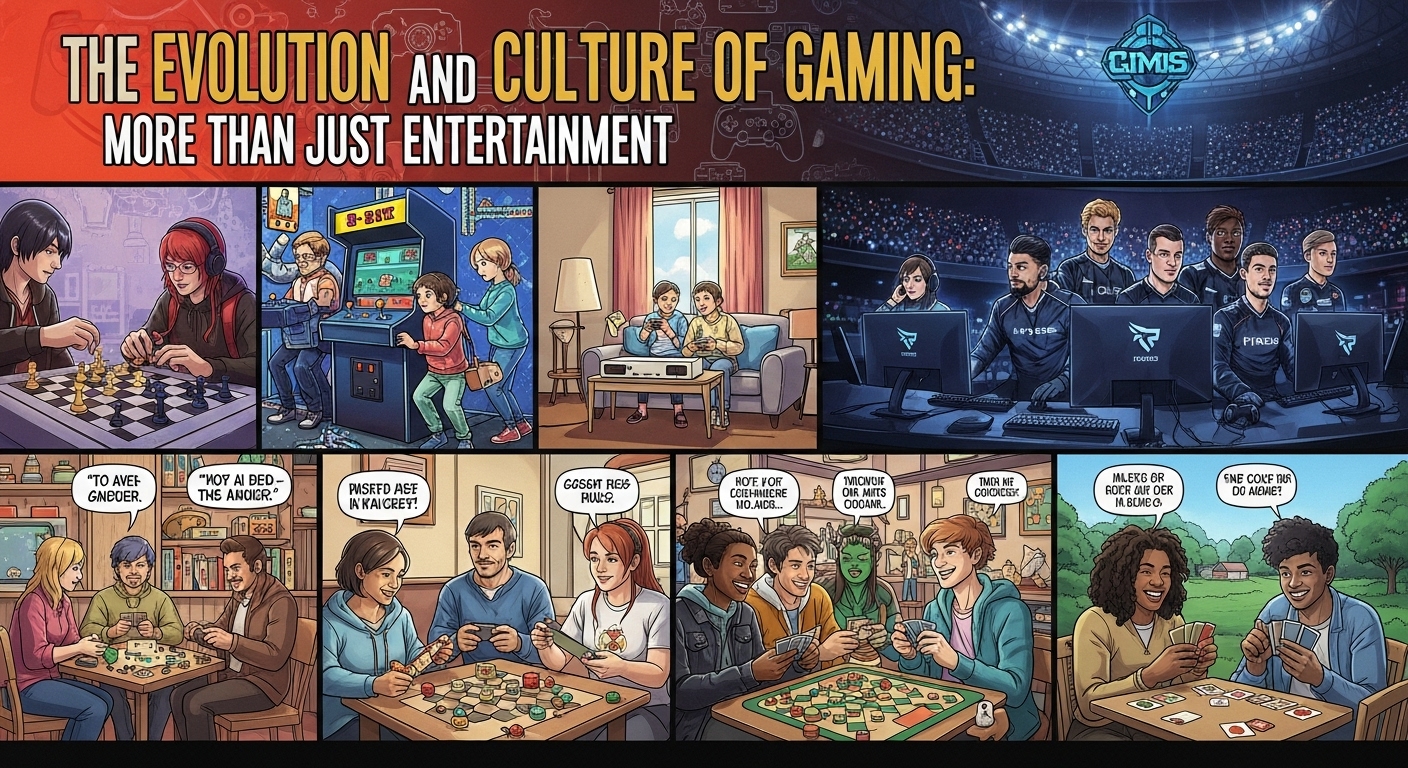
Gaming has become one of the most influential forms of entertainment in the modern world. From humble beginnings with simple pixelated graphics to today’s hyper-realistic, immersive virtual worlds, the gaming industry has experienced rapid growth, innovation, and cultural impact. This blog post explores the fascinating journey of gaming, examining its history, evolution, technological advancements, social impact, and the future prospects of this ever-expanding domain.
A Journey Through Gaming History
The Birth of Video Games
The concept of video games dates back to the 1950s and 1960s, when experimental computer programs were designed for entertainment and research purposes. Early games such as “Tennis for Two” and “Spacewar!” laid the foundation for interactive digital entertainment. These initial creations were rudimentary, but they sparked the imagination of both programmers and players, showing that computers could serve as more than just calculation machines.
The Arcade Era
The 1970s and 1980s marked the rise of arcade gaming. Classic titles like “Pac-Man,” “Donkey Kong,” and “Space Invaders” became cultural phenomena. Arcades were not just places to play games—they were social hubs where players competed for high scores, shared tips, and developed a sense of community. The simplicity of arcade games, combined with addictive gameplay, set the stage for gaming to become mainstream entertainment.
The Console Revolution
The introduction of home consoles in the 1980s revolutionized gaming. Systems like the Nintendo Entertainment System (NES) and Sega Genesis brought gaming into living rooms worldwide. Iconic characters such as Mario, Sonic, and Link became household names, and franchises that remain relevant today were born. The home console era shifted gaming from a public space to private spaces, giving players the freedom to explore worlds at their own pace.
The PC Gaming Era
Parallel to consoles, personal computers opened new possibilities for gaming. With the rise of PCs in the 1990s, players gained access to more complex, strategy-driven, and graphically advanced games. Titles like “Doom,” “Warcraft,” and “The Sims” demonstrated that PC gaming offered depth and creativity beyond what consoles could provide. The flexibility of PC gaming also led to modding communities, which allowed players to modify and enhance games, contributing to a culture of creativity and innovation.
Technological Advancements Transforming Gaming
Graphics and Immersion
One of the most significant transformations in gaming has been the advancement of graphics. From the blocky, pixelated sprites of early games to photorealistic textures and lifelike character models, graphics technology has drastically improved. The rise of 3D graphics, high-definition displays, and ray tracing has enhanced immersion, making virtual worlds feel more alive than ever before.
Sound and Music
Sound design and music have evolved alongside visuals to enrich the gaming experience. Early games had simple beeps and tones, but modern titles feature orchestral scores, dynamic soundtracks, and spatial audio. Audio cues now play a crucial role in gameplay, from alerting players to nearby threats to enhancing emotional storytelling.
Artificial Intelligence in Games
Artificial intelligence (AI) has transformed how games challenge and engage players. NPCs (non-playable characters) can now respond intelligently to player actions, providing dynamic and unpredictable experiences. AI-driven procedural generation allows for vast, unique worlds in games like “Minecraft” and “No Man’s Sky,” ensuring that no two playthroughs are ever identical.
Online Multiplayer and Connectivity
The advent of online gaming has reshaped the social aspect of gaming. Multiplayer experiences allow players to connect with others worldwide, competing or cooperating in real time. Games like “World of Warcraft,” “Fortnite,” and “Call of Duty” have created vast online communities, while esports tournaments have turned competitive gaming into a spectator sport.
The Cultural Impact of Gaming
Gaming as Storytelling
Video games are no longer just about high scores or fast reflexes—they are a medium for storytelling. Games like “The Last of Us,” “Red Dead Redemption,” and “God of War” offer complex narratives, character development, and emotional depth comparable to films and literature. Players are no longer passive observers; they actively shape the story through choices, making the experience personal and memorable.
Representation and Diversity
Gaming has become a platform for representation and diversity. Modern games feature protagonists from various backgrounds, genders, and cultures, reflecting the global player base. This inclusivity allows more players to see themselves in the stories being told and fosters a sense of belonging within the gaming community.
Gaming and Education
Beyond entertainment, gaming has educational potential. Many games enhance critical thinking, problem-solving, and creativity. Strategy games like “Civilization” teach resource management and planning, while simulation games like “Kerbal Space Program” introduce players to physics and engineering concepts. Gamification is also used in classrooms to make learning interactive and engaging.
Gaming and Mental Health
Gaming has been shown to have both positive and negative impacts on mental health. On the positive side, games can provide stress relief, social connection, and cognitive stimulation. Cooperative and casual games foster teamwork and relaxation. However, excessive gaming can lead to issues such as addiction or social isolation, highlighting the need for balance and moderation.
The Rise of Esports
Esports has transformed competitive gaming into a professional industry. Players can now earn substantial incomes through tournaments, sponsorships, and streaming. Titles like “League of Legends,” “Dota 2,” and “Counter-Strike: Global Offensive” have massive followings, with competitions broadcast to millions of viewers worldwide. Esports has not only created new career paths but has also elevated gaming to a respected form of athletic and strategic skill.
Gaming Communities and Social Interaction
Online Communities
Gaming communities are vibrant spaces where players share experiences, strategies, and content. Platforms like Discord, Reddit, and Twitch facilitate interaction, allowing gamers to form friendships, collaborate on projects, and participate in discussions. These communities also empower fan creations, such as fan art, mods, and custom levels, enriching the gaming culture.
Streaming and Content Creation
Streaming platforms have given rise to a new form of entertainment: watching others play games. Content creators engage audiences through live gameplay, tutorials, and commentary. This has created a symbiotic relationship between players and viewers, where community engagement can influence game development and trends.
The Future of Gaming
Virtual Reality and Augmented Reality
Virtual reality (VR) and augmented reality (AR) are pushing the boundaries of immersive gameplay. VR headsets allow players to step inside fully interactive worlds, experiencing games in a first-person perspective. AR integrates digital elements into the real world, offering experiences like exploring virtual creatures in your neighborhood. These technologies promise to revolutionize how we perceive and interact with games.
Cloud Gaming
Cloud gaming is another game-changer, enabling players to stream high-quality games without powerful hardware. This reduces barriers to entry, making gaming more accessible to a broader audience. Services like cloud gaming platforms allow seamless access to vast game libraries, transforming the way players own and interact with games.
Artificial Intelligence and Procedural Content
AI will continue to enhance gaming by generating content dynamically, creating smarter NPCs, and personalizing gameplay experiences. Procedural content generation ensures endless variety, while AI-driven storytelling can adapt narratives based on individual player behavior, making each playthrough unique.
The Ethical Considerations
As gaming evolves, ethical considerations become more important. Issues such as data privacy, online harassment, and loot box mechanics require careful regulation. Developers and communities must work together to create safe, inclusive, and enjoyable gaming environments for all players.
Conclusion
Gaming has come a long way from its early days of simple pixels and beeps. It has grown into a multifaceted industry that combines art, technology, storytelling, and social connection. Whether it is through immersive virtual worlds, competitive esports, or educational games, gaming continues to shape culture, foster creativity, and connect people across the globe.
As technology advances, the future of gaming promises even greater immersion, accessibility, and innovation. From virtual reality to AI-driven experiences, players can expect worlds that are more dynamic, inclusive, and interactive than ever before. Gaming is no longer just entertainment—it is a medium that reflects and shapes the world, offering endless possibilities for those willing to explore its ever-expanding universe.
Gaming is not just about playing; it is about experiencing, creating, and connecting. It is a journey that continues to evolve, offering a space where imagination meets technology, and where players become part of something larger than themselves. The story of gaming is far from over, and its next chapters promise adventures we have only just begun to imagine.