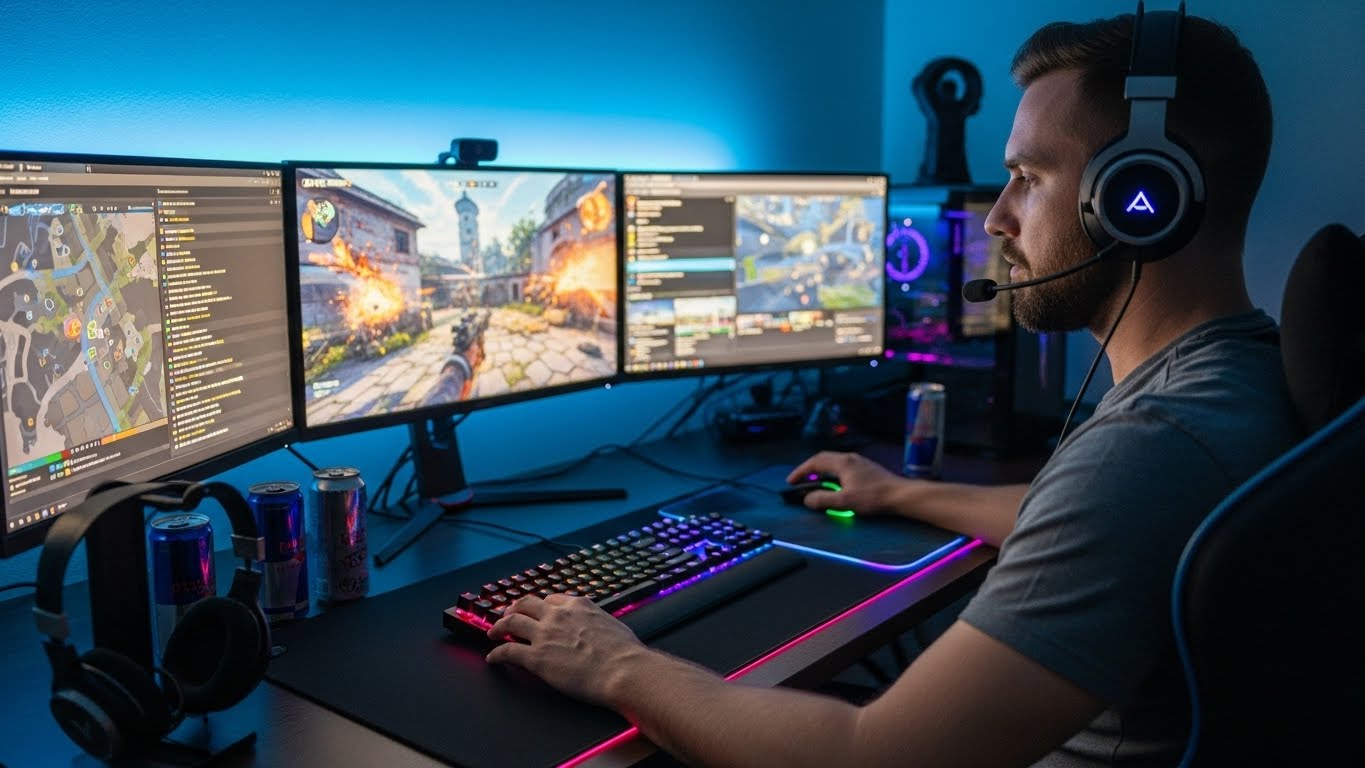

Introduction: Gaming’s Journey from Niche Hobby to Global Phenomenon
The world of gaming has come a long way from its humble beginnings. Once considered a niche hobby for technology enthusiasts, gaming has now become one of the most influential forces in entertainment, culture, and social interaction. Over the decades, gaming has evolved into a multi-billion-dollar industry, drawing millions of people into digital worlds, creating global communities, and sparking new forms of entertainment that blend storytelling, art, and technology. In this blog post, we will explore the history of gaming, its rise as a mainstream activity, its current role in society, and the exciting future developments on the horizon.
The Birth of Gaming: From Early Pioneering Efforts to Iconic Arcade Classics
The story of modern gaming begins in the 1950s with the earliest experiments in interactive electronic entertainment. The first significant breakthrough came in 1958 when physicist William Higinbotham created Tennis for Two, one of the first interactive games to use a screen. While this was more of an experiment than a commercial product, it set the foundation for what was to come.
In 1972, Atari released Pong, the first commercially successful arcade game. Pong was simple yet addictive: a digital version of table tennis that captured the imagination of millions. The success of Pong sparked the arcade game boom of the 1970s and 1980s. Iconic games such as Space Invaders, Asteroids, and Pac-Man became cultural milestones, and arcades became social hubs for a generation of gamers.
The golden age of arcade gaming led to the birth of the home console. In 1977, Atari launched the Atari 2600, bringing video games into people’s homes. This shift allowed for more extensive gaming experiences, as players could now enjoy the same arcade-style games without leaving the comfort of their living rooms. The Atari 2600 helped to cement video games as an entertainment medium with widespread appeal.
The Console Wars: The Battle for Gaming Supremacy
The 1980s saw the rise of iconic gaming consoles like the Nintendo Entertainment System (NES), Sega Master System, and the Commodore 64. The launch of the NES in 1985 was a pivotal moment in gaming history. It helped to rejuvenate the gaming industry after the video game crash of 1983, which saw a collapse in the market due to oversaturation and poor-quality games.
Nintendo’s success with the NES was driven by a combination of factors: the introduction of beloved franchises like Super Mario Bros., The Legend of Zelda, and Metroid, as well as the development of a more reliable software development model that ensured the quality of the games released for its system. These titles not only became classics but also helped to elevate the medium of video games as a legitimate form of entertainment.
In response to Nintendo’s dominance, Sega introduced the Sega Genesis (Mega Drive) in 1988. The Genesis’ introduction into the market was marked by intense rivalry between Sega and Nintendo, often referred to as the “Console Wars.” Sega’s aggressive marketing tactics and the launch of the Sonic the Hedgehog franchise helped make the Genesis a formidable competitor, leading to a rivalry that captured the attention of gaming enthusiasts worldwide.
The 1990s ushered in the age of 3D graphics and cutting-edge gameplay. Sony’s PlayStation, launched in 1994, revolutionized gaming with its 3D capabilities, CD-ROM-based games, and iconic titles like Final Fantasy VII, Gran Turismo, and Crash Bandicoot. The PlayStation helped to establish Sony as a major player in the gaming market, competing fiercely with Nintendo’s Super Nintendo Entertainment System (SNES) and the Sega Saturn.
The Rise of Online Gaming: Connecting Players Around the World
While consoles continued to evolve, the 1990s also saw the dawn of online gaming. The internet revolutionized how players could interact with one another in virtual spaces. Multiplayer games like Warcraft, Quake, and StarCraft were some of the first to allow players to compete against each other over the internet, changing the way people thought about gaming. The real breakthrough for online gaming came with the launch of EverQuest in 1999, one of the first massively multiplayer online role-playing games (MMORPGs).
World of Warcraft (WoW), released in 2004, took online gaming to a whole new level, offering a vast, persistent online world where players could embark on epic quests, fight monsters, and interact with other players from around the globe. WoW became a cultural phenomenon, attracting millions of subscribers and transforming gaming into a social activity. This period also saw the rise of esports, where competitive gaming became a global spectacle, attracting huge audiences both online and in person.
As the internet grew, so did the concept of online multiplayer games. Titles like Counter-Strike, League of Legends, and Fortnite continued to evolve the concept of gaming as a team-based, competitive experience. These games not only offered intense competition but also introduced new ways for players to communicate, collaborate, and form social bonds through digital spaces.
The Mobile Revolution: Gaming in Your Pocket
The rise of smartphones in the late 2000s opened up an entirely new frontier for gaming. The mobile gaming market exploded with the release of casual games like Angry Birds and Candy Crush Saga, which became global hits and introduced millions of new players to the world of gaming. Mobile gaming, with its simple, accessible design, attracted a wide audience, from children to adults, and became a mainstream form of entertainment.
As smartphones became more powerful, mobile gaming evolved, incorporating more complex gameplay mechanics and features. Games like Clash of Clans, Pokémon GO, and PUBG Mobile showed that mobile games could offer deep, multiplayer experiences that rivaled those of traditional console games. The combination of portability, accessibility, and social interaction made mobile gaming one of the fastest-growing segments in the gaming industry.
Cloud gaming, where games are streamed directly to devices without the need for powerful hardware, is also on the rise. Services like Google Stadia, Xbox Cloud Gaming, and NVIDIA GeForce Now allow players to access high-quality games from anywhere, bringing console-like experiences to smartphones, tablets, and laptops.
The Cultural Impact of Gaming: More Than Just Entertainment
Gaming has become an essential part of modern culture, influencing everything from music and movies to fashion and social trends. Characters like Mario, Sonic, and Master Chief are household names, and gaming franchises like Super Mario, The Legend of Zelda, and Final Fantasy have become cultural touchstones that transcend the gaming world. Games like The Witcher 3, The Last of Us, and Red Dead Redemption have shown that video games can tell rich, emotionally impactful stories that rival those of movies and literature.
The social aspect of gaming has also become a major part of its appeal. Online multiplayer games create virtual spaces where players can forge friendships, collaborate, and compete with people from around the world. Platforms like Twitch and YouTube have allowed gamers to become content creators, streaming their gameplay and sharing their experiences with millions of fans. Gaming has evolved from a solitary activity into a communal experience, with players gathering online to enjoy games together and share their love of the medium.
Esports has emerged as a global phenomenon, with professional players, teams, and tournaments attracting massive audiences and lucrative sponsorships. Games like Dota 2, League of Legends, and Overwatch have turned competitive gaming into a legitimate sport, with tournaments held in major arenas and broadcast to millions of viewers online.
The Future of Gaming: Virtual Reality, AI, and Beyond
As technology continues to advance, the future of gaming looks more exciting than ever. Virtual reality (VR) and augmented reality (AR) are set to redefine the gaming experience. VR headsets like Oculus Rift, HTC Vive, and PlayStation VR are already allowing players to immerse themselves in fully realized virtual worlds, offering a new level of interactivity and immersion. The use of AR in games like Pokémon GO demonstrates how the virtual and real worlds can blend together, offering innovative gameplay experiences that were previously unimaginable.
Artificial intelligence (AI) is also playing an increasingly important role in gaming. AI is being used to create more sophisticated, reactive characters and more dynamic game worlds. As AI technology improves, we can expect games to become even more personalized and immersive, offering players unique experiences based on their actions and decisions.
Cloud gaming is expected to continue to grow, as faster internet speeds and improved infrastructure allow players to stream games seamlessly across multiple devices. The ability to access high-quality games without needing expensive hardware is set to revolutionize the way people play, making gaming more accessible to a broader audience.
Conclusion: Gaming’s Enduring Legacy
The evolution of gaming has been nothing short of extraordinary. From its beginnings as a simple pastime to its current status as a global entertainment powerhouse, gaming has transformed the way we interact with technology, culture, and each other. As technology continues to advance, the future of gaming holds incredible possibilities, from virtual and augmented reality to AI-driven gameplay experiences. With gaming continuing to push the boundaries of creativity and innovation, it’s clear that its influence will only continue to grow in the years to come.