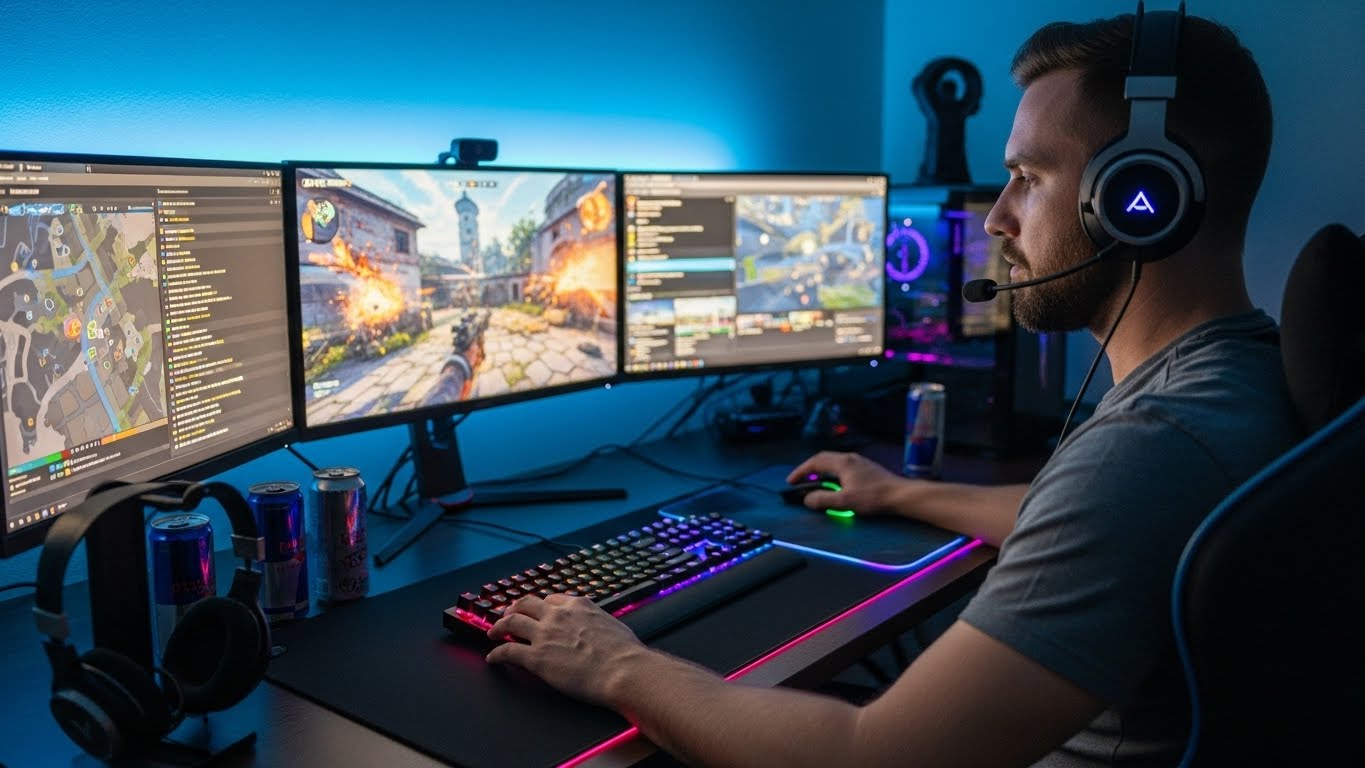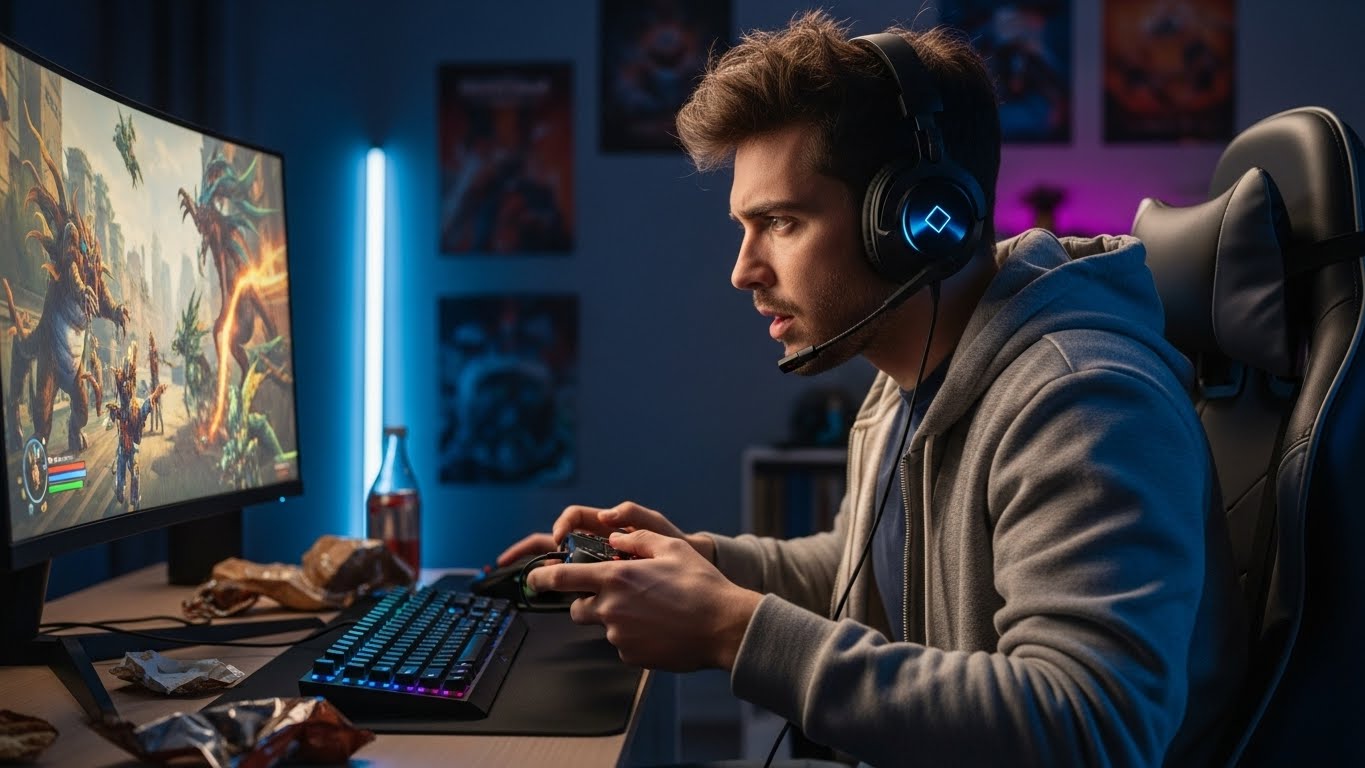
Gaming has come a long way since the early days of pixelated characters and simple joystick controls. From the arcades of the ’80s to the immersive, hyper-realistic worlds we explore today, gaming has evolved into a powerful form of entertainment that engages millions worldwide. But gaming is more than just a hobby or a way to pass the time; it’s an experience, a journey into alternate realities where anything is possible. Whether you’re navigating a post-apocalyptic wasteland or solving ancient puzzles, gaming offers an escape and an opportunity to build, create, and connect.
The Evolution of Gaming
The world of gaming has experienced radical transformation over the past few decades. Early video games like Pong and Space Invaders relied on basic graphics and simple mechanics. As technology advanced, so did the complexity of games. The rise of 3D graphics in the ’90s led to the creation of some of the most iconic games, such as Super Mario 64, The Legend of Zelda: Ocarina of Time, and Final Fantasy VII. These games didn’t just change the way we played—they changed the way we thought about interactive entertainment.
In recent years, gaming has reached unprecedented heights. With consoles like the PlayStation 5 and Xbox Series X, as well as high-performance gaming PCs, players are now treated to stunning visuals, realistic physics, and expansive open-world environments. Virtual reality (VR) and augmented reality (AR) have also begun to make their mark, providing experiences that bring us closer to the action than ever before.
More Than Just a Game: The Power of Storytelling
At the heart of most successful games lies a compelling story. From the emotional depth of The Last of Us to the open-ended freedom of The Witcher 3, modern games are more than just challenges to be conquered—they’re narratives to be experienced. These stories often rival the emotional weight of movies or books, with characters that feel as real as those in the real world. It’s not just about winning anymore; it’s about becoming a part of the world that’s been created for you.
Take Red Dead Redemption 2, for example. Beyond its stunning graphics and detailed world, the game weaves a tale of survival, morality, and the consequences of living outside the law. The choices you make as Arthur Morgan shape not only the fate of the characters but the entire world around you. This level of storytelling is what makes gaming such a unique and immersive medium.
The Social Side of Gaming
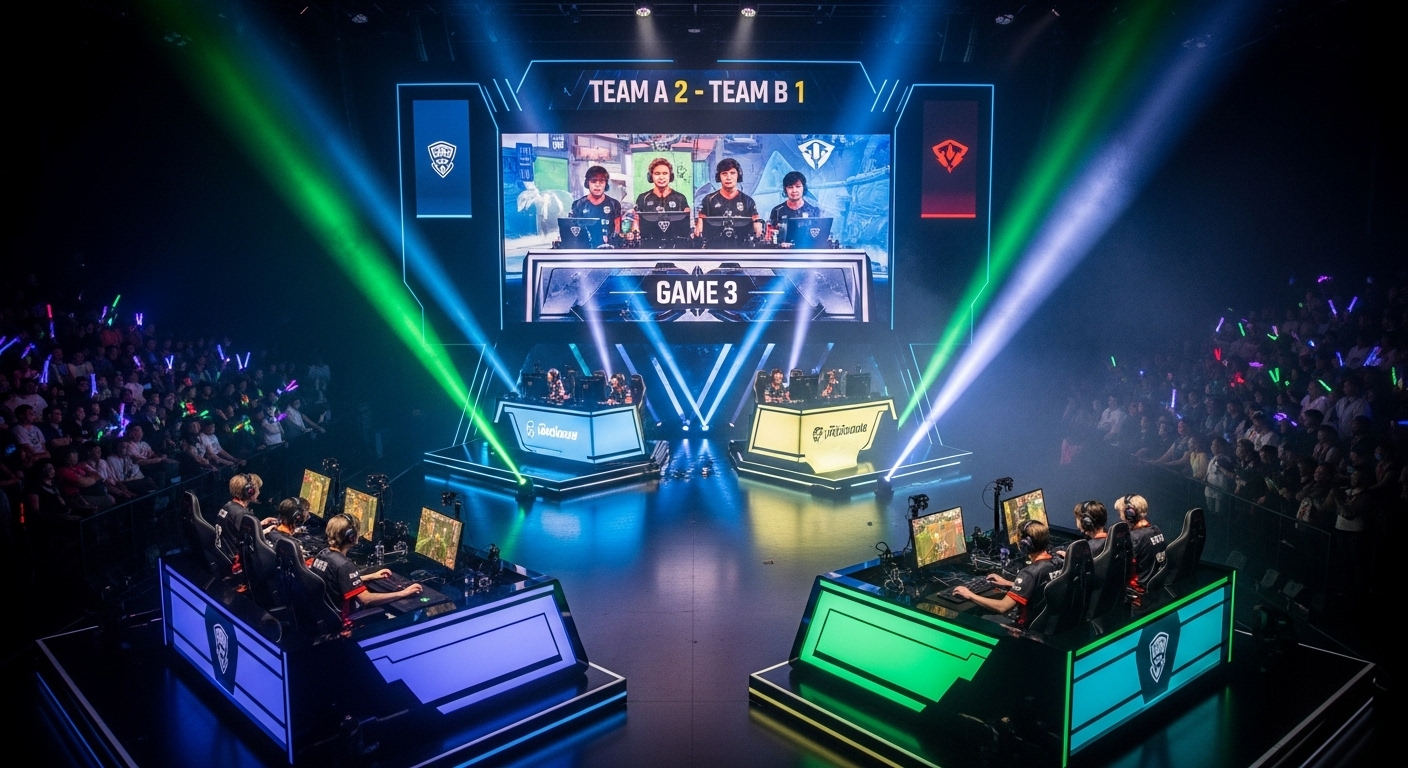
Gaming has also become one of the largest social activities worldwide. What began as a solo pastime has transformed into a global community of players who connect through multiplayer games, live streams, and esports tournaments. Whether it’s battling in Fortnite, collaborating in Minecraft, or competing in League of Legends, gaming is no longer just an individual activity. It’s a platform for forming friendships, building teams, and experiencing shared triumphs and defeats.
Online multiplayer games allow players to form communities based on shared interests and skills. The rise of platforms like Twitch has taken this social aspect even further, allowing gamers to broadcast their playthroughs and interact with fans from all over the world. Esports, once a niche interest, has exploded into a global industry, with millions of fans tuning in to watch professional teams compete for prizes and prestige.
The Mental and Cognitive Benefits of Gaming
While gaming is often seen as a form of escapism, it also offers numerous cognitive and psychological benefits. Research has shown that playing certain types of video games can improve problem-solving skills, enhance memory, and boost concentration. Games that require strategic thinking or quick decision-making, such as StarCraft or Counter-Strike, challenge the brain to stay sharp and adapt to rapidly changing situations.
Furthermore, many games promote teamwork and communication, fostering skills that are valuable in both personal and professional settings. Cooperative games like Overcooked or Apex Legends teach players how to collaborate effectively, while competitive games encourage perseverance, adaptability, and critical thinking.
The Future of Gaming: What’s Next?
As technology continues to advance, the future of gaming holds endless possibilities. The rise of AI-driven narratives, where each player’s actions can change the outcome of the game in real-time, is just the beginning. Cloud gaming, which allows players to stream games without the need for expensive hardware, is already gaining momentum. And who knows? With the development of brain-computer interfaces, it might not be long before we can experience games in ways we’ve only dreamed about.
In the world of gaming, the possibilities are as vast as the worlds we explore within these digital realms. From cutting-edge graphics to complex narratives and social communities, gaming is more than just a way to pass the time—it’s a portal to new experiences, a vehicle for personal growth, and a space where imagination knows no bounds.
Conclusion
Gaming has become an essential part of our modern culture, offering something for everyone. Whether you’re a casual player who enjoys an afternoon session of Animal Crossing or a hardcore enthusiast immersed in the complexities of Dark Souls, there’s no denying that gaming is here to stay. It’s not just about playing a game—it’s about creating memories, forging connections, and embracing the thrill of discovery. In many ways, gaming has become its own art form, continually pushing the boundaries of what we thought was possible in entertainment. So, whether you’re a seasoned gamer or a newcomer, the world of gaming is waiting for you to dive in and explore.