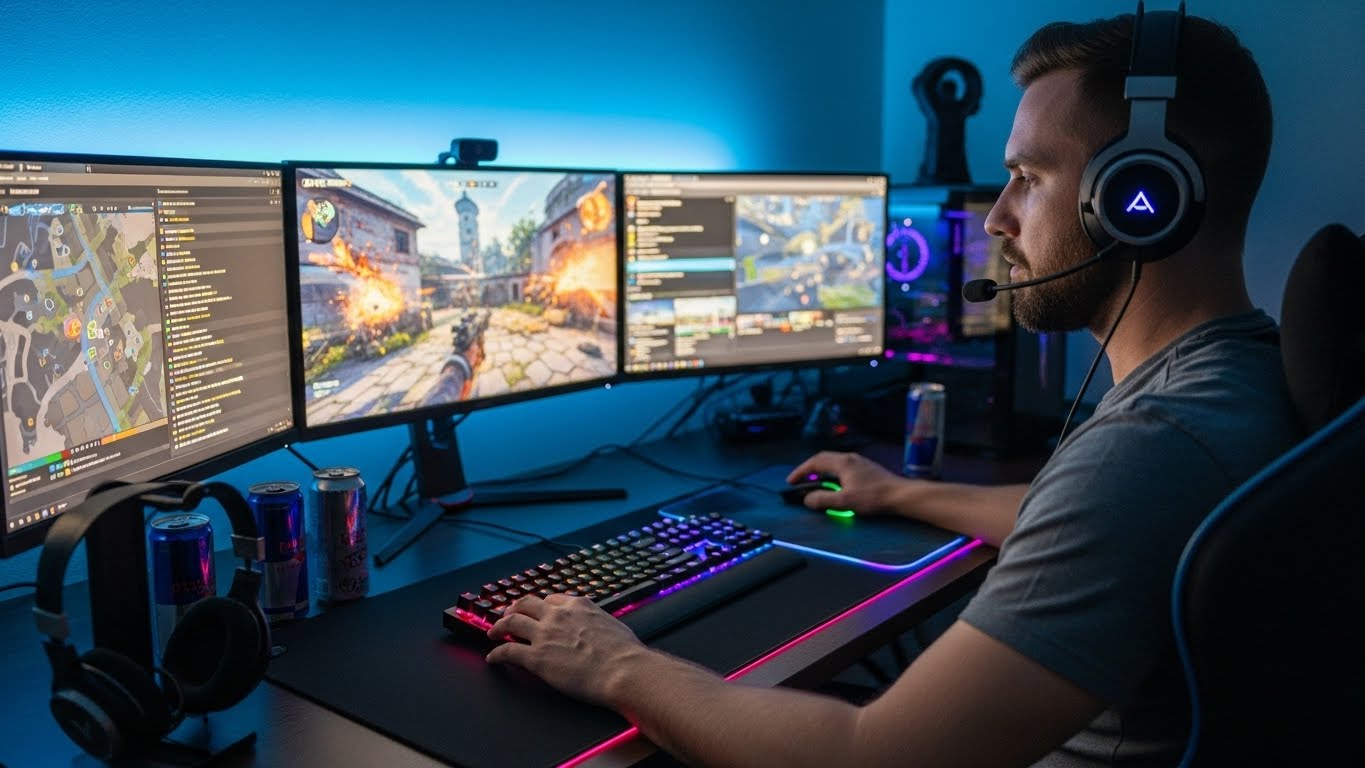
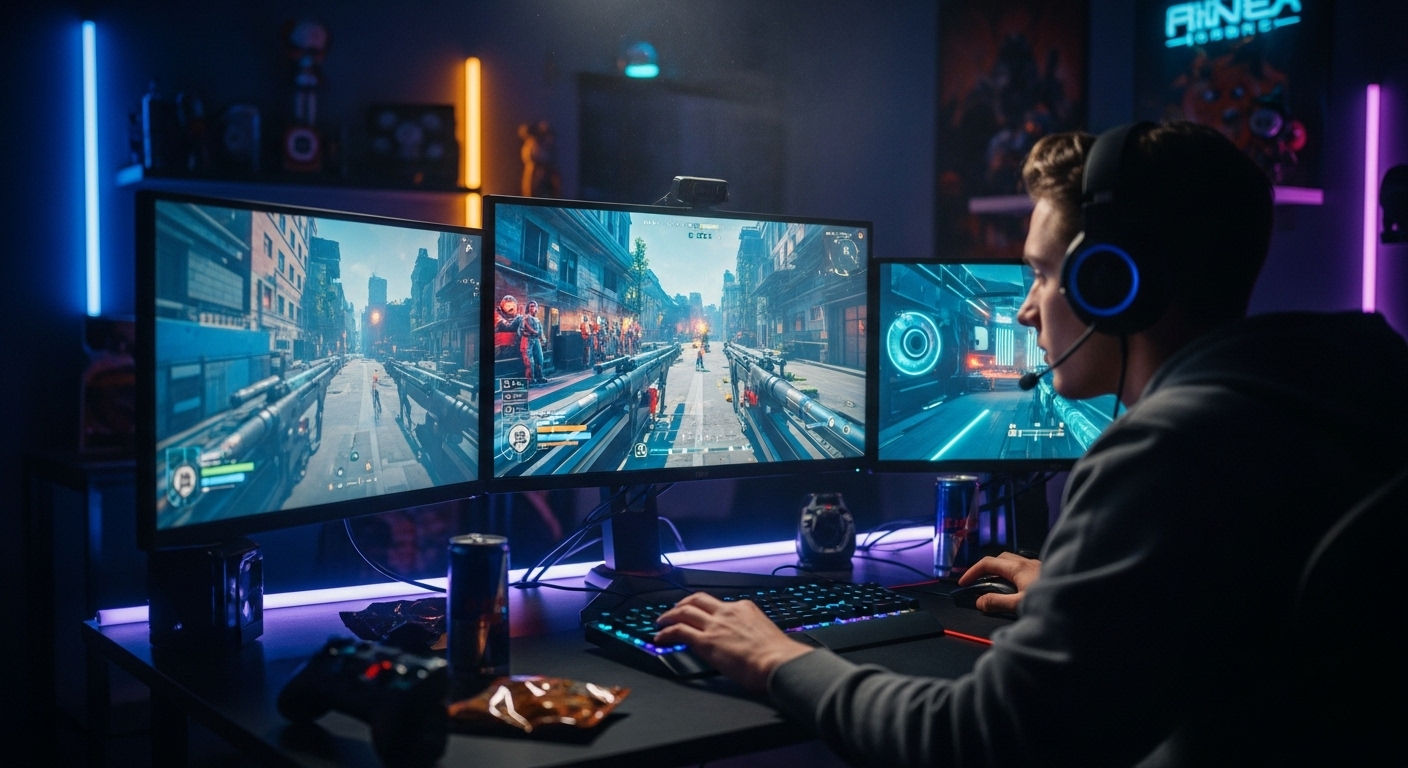
Gaming has long been more than just a pastime. It has become a cultural force, a community hub, and a technological marvel. The journey from simple arcade machines to the rich, immersive experiences we have today speaks volumes about the evolution of this entertainment medium. In this blog post, we’ll take a look at how gaming has transformed over the years, its impact on society, and what the future might hold for this exciting world.
The Humble Beginnings of Gaming
In the early days, gaming was an arcade-centric activity. The 1970s and 1980s witnessed the birth of some of the most iconic video games in history. Simple, pixelated visuals ruled the screens, and gameplay was often a matter of timing, precision, and pure fun. The first major hit, Pong, was a revolutionary idea—two paddles and a bouncing ball. This simplicity laid the groundwork for the video game industry.
Following Pong’s success, games like Space Invaders and Pac-Man changed the landscape, introducing more dynamic gameplay and captivating the attention of players. During this era, arcades became social hubs where people gathered to challenge each other and enjoy friendly competition. Home consoles also began emerging, with the Atari 2600 marking the first time that video games could be played at home, changing the way we looked at gaming forever.
The Golden Age of Consoles and New Worlds
The 1980s and 1990s marked the golden age of home consoles. With the launch of systems like the Nintendo Entertainment System (NES) and Sega Genesis, gaming went mainstream. These consoles brought a wealth of unforgettable titles that are still cherished today. Games like Super Mario Bros. and Sonic the Hedgehog defined entire generations, offering adventures that were both simple and endlessly replayable.
During this period, we also saw the rise of role-playing games (RPGs), which gave players the chance to immerse themselves in fantastical worlds. Final Fantasy and The Legend of Zelda created vast universes filled with intricate stories and complex characters. These games took what was once a simple pastime and transformed it into an art form, mixing narrative and gameplay in ways that few other mediums could match.
3D Gaming and the Quest for Realism
The late 1990s and early 2000s ushered in the era of 3D gaming, and with it, a new level of immersion. The release of Sony PlayStation, Nintendo 64, and Sega Dreamcast introduced players to full 3D environments. With better graphics and more complex game design, developers were now able to create vast, open-world environments and characters that felt more alive than ever before.
Games like Super Mario 64, The Legend of Zelda: Ocarina of Time, and Metal Gear Solid pushed the boundaries of what video games could achieve, setting new standards for storytelling and gameplay. This era also marked the first time we saw fully realized 3D worlds that allowed for exploration, freedom, and strategic decision-making, offering an experience that was both visually stunning and deeply engaging.
The Online Revolution: Gaming Gets Social
As technology evolved, the internet became a driving force behind the next phase of gaming. In the 2000s, broadband internet and the introduction of multiplayer online gaming changed how we played. Titles like World of Warcraft, Halo 2, and Call of Duty allowed players to interact with others from around the world. These games not only offered exciting challenges but also created communities where players could bond, strategize, and compete.
Online multiplayer gaming also introduced a new dynamic: the rise of esports. Competitive gaming became a serious industry, with tournaments and live-streamed events attracting massive audiences. The sense of camaraderie and rivalry among players made gaming a truly social activity. Platforms like Twitch further amplified this shift, allowing viewers to watch professional players and streamers in action.
Mobile Gaming: Gaming for Everyone, Everywhere
The rise of smartphones in the late 2000s opened up a new frontier for gaming. Suddenly, you didn’t need a dedicated console or powerful PC to enjoy a game. Games like Angry Birds and Candy Crush made gaming accessible to anyone with a smartphone, offering bite-sized experiences that could be played during a commute, in a waiting room, or anywhere else.
Mobile gaming democratized the industry. Casual games became just as popular, if not more so, than traditional console or PC games. The ability to access a wide range of games on the go revolutionized the idea of what it means to be a gamer. Plus, with free-to-play models and in-app purchases, mobile gaming introduced new ways of monetizing games that have influenced the industry as a whole.
The Rise of Virtual Reality: A New Frontier in Gaming
Looking ahead, virtual reality (VR) is poised to take gaming to new heights. VR technology allows players to step into fully immersive worlds, where every action is directly tied to their physical movements. Games like Beat Saber and Half-Life: Alyx have already demonstrated the potential of VR, offering a level of immersion that was once only dreamed of in sci-fi films.
While VR is still in its early stages, it has the potential to completely reshape how we experience games. By providing players with the ability to interact with their environment in a 360-degree space, VR makes gaming feel more like a real-world experience. As the technology improves, it is likely that we will see even more sophisticated virtual worlds with higher fidelity graphics, better motion tracking, and greater interactivity.
What Lies Ahead for Gaming?
Gaming is on the cusp of even more revolutionary changes. With the rise of artificial intelligence (AI), machine learning, and cloud gaming, we may soon see games that adapt and respond to players in real-time, offering personalized experiences like never before. Cloud gaming could allow players to access high-end games from almost any device, removing the need for expensive hardware.
Furthermore, the growing intersection of gaming and other forms of entertainment—such as movies, music, and even education—suggests that we may enter an era of even greater cross-platform experiences. The future could hold entirely new ways to engage with games, blending storytelling, interactive media, and social experiences into something entirely unique.
Conclusion: Gaming’s Endless Possibilities
From its humble beginnings to the cutting-edge technologies we see today, gaming has come a long way. It has evolved into a medium that not only entertains but also connects people, fosters communities, and pushes the boundaries of creativity and technology. As we look ahead, the future of gaming seems boundless. With each new advancement, we unlock new possibilities, making it an exciting time to be a gamer. Whether you’re playing on a console, PC, or mobile device—or stepping into the world of virtual reality—the universe of gaming continues to expand, offering limitless adventures for everyone to explore.