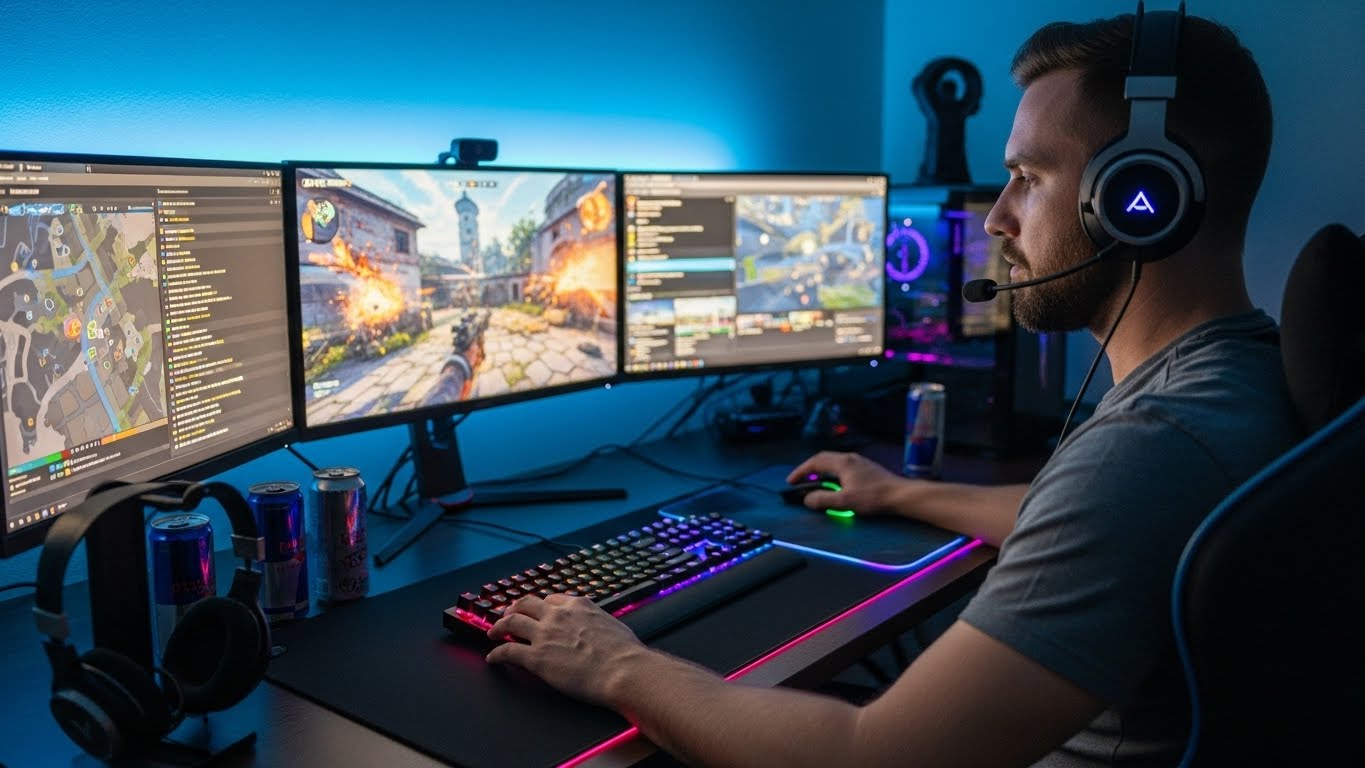

Gaming has come a long way since its humble beginnings in arcades and living rooms. Over the decades, the gaming industry has transformed, influencing not just entertainment, but also technology, social interactions, and culture. Whether it’s an afternoon spent conquering virtual worlds or a marathon session with friends, gaming has become an essential part of modern life. In this blog post, we will explore the evolution of gaming, its cultural impact, and how it has shaped the digital world we know today.
The Beginnings: Arcade Games and Consoles
The history of gaming can be traced back to the 1950s, with early experiments in computer graphics and interactive entertainment. However, it wasn’t until the 1970s that gaming truly found its place in mainstream culture. This era introduced arcade games, a new form of entertainment that drew crowds to dimly lit rooms filled with clanking machines. “Pong,” released by Atari in 1972, was one of the first commercially successful arcade games. Its simple yet addictive gameplay involved two paddles bouncing a ball back and forth, and it became an instant hit.
Arcades quickly became hubs of social activity, where people gathered to compete and socialize. Games like “Space Invaders,” “Pac-Man,” and “Donkey Kong” followed, setting the stage for the golden age of arcade gaming. These early games were simple by today’s standards, but they were groundbreaking at the time, introducing the concept of high scores, competition, and the idea that video games could be an immersive experience.
The Rise of Home Consoles
While arcade games dominated the 70s and early 80s, the next big leap in gaming came with the arrival of home consoles. The idea of playing video games in the comfort of one’s living room was an appealing one, and the market responded. In 1977, Atari released the Atari 2600, one of the first home video game consoles. It featured a joystick controller and interchangeable game cartridges, allowing players to enjoy a variety of titles without leaving home.
This shift brought about a significant cultural change. Video games became more accessible, and the notion of “gaming” expanded beyond arcades to homes across the world. By the 1980s, consoles such as the Nintendo Entertainment System (NES) and Sega Genesis introduced more sophisticated games, including iconic franchises like “Super Mario,” “The Legend of Zelda,” and “Sonic the Hedgehog.” These games had compelling narratives, colorful graphics, and memorable characters, setting the stage for the gaming experiences we recognize today.
The 3D Revolution: A New Dimension of Gameplay
The 1990s marked a dramatic shift in the gaming landscape. As hardware improved, so did the potential for more complex and immersive games. The advent of 3D graphics in the mid-90s brought a new dimension to gaming that forever altered the way games were played. With the release of the Sony PlayStation in 1994, players were introduced to fully 3D-rendered environments and characters. Titles like “Final Fantasy VII,” “Gran Turismo,” and “Tomb Raider” showcased the power of 3D graphics and solidified the PlayStation as a key player in the gaming market.
This era also saw the rise of iconic franchises that are still popular today. Nintendo’s Super Mario 64, released in 1996 for the Nintendo 64, revolutionized platforming by offering a truly 3D environment in which players could explore vast worlds. Meanwhile, “The Legend of Zelda: Ocarina of Time” became a landmark title, praised for its open-world design, deep storytelling, and innovative gameplay mechanics.
As the 3D revolution took hold, the gaming community began to embrace online multiplayer experiences. The 1999 release of “Unreal Tournament” and other similar games showed that players could not only engage in single-player campaigns but also battle each other over the internet. This was the beginning of competitive gaming, a trend that would continue to grow in the coming decades.
The Age of Online Gaming and Multiplayer Experiences
The early 2000s brought the internet into the fold, fundamentally changing the gaming experience. Broadband internet connections became more accessible, and developers began to focus on creating online multiplayer games that allowed players to connect and interact in real-time, regardless of their physical location.
Games like “World of Warcraft” (2004), a massively multiplayer online role-playing game (MMORPG), defined a generation of gamers. “WoW” became a cultural phenomenon, with millions of players worldwide immersing themselves in its expansive virtual world. For many, it was not just about the game itself but the sense of community that it fostered. The ability to form guilds, embark on quests with friends, and compete in large-scale raids created a sense of belonging and camaraderie that transcended geographic boundaries.
Similarly, the Xbox Live service, launched in 2002, brought the concept of online multiplayer gaming to consoles. Games like “Halo 2” allowed players to battle each other in virtual arenas, and the success of Xbox Live paved the way for other console-based online services, such as PlayStation Network and Nintendo’s Wi-Fi Connection.
These online games led to the rise of esports. Competitive gaming became a global industry, with professional leagues and tournaments offering huge cash prizes. Games like “League of Legends,” “Counter-Strike: Global Offensive,” and “Overwatch” have created a new breed of professional athletes and provided viewers with an entirely new form of entertainment.
The Era of Mobile Gaming
In the late 2000s, the gaming world experienced yet another shift. The rise of smartphones introduced a new, more casual form of gaming. Games like “Angry Birds” and “Candy Crush Saga” became cultural staples, reaching millions of players who had never considered themselves “gamers” before. Mobile gaming was accessible, affordable, and could be played in short bursts, making it ideal for busy lifestyles.
The App Store and Google Play Store became platforms where developers could reach a massive audience. Mobile gaming allowed developers to experiment with new genres, and titles like “Clash of Clans” and “Pokémon Go” became instant sensations. Pokémon Go, for instance, took the gaming world by storm in 2016 by integrating augmented reality (AR) with real-world exploration. It showed that gaming didn’t have to be confined to a screen but could be experienced in the real world, blending digital and physical realities.
Virtual Reality: The Future of Gaming
One of the most exciting developments in recent years has been the rise of virtual reality (VR). VR technology allows players to immerse themselves in entirely new digital worlds, offering an unparalleled level of interactivity and realism. While VR gaming has been around for decades in various forms, it wasn’t until the release of Oculus Rift in 2016 and the subsequent launch of PlayStation VR that it started to gain mainstream attention.
Today, VR is still a relatively niche market but is growing rapidly. Games like “Beat Saber,” “Half-Life: Alyx,” and “No Man’s Sky VR” offer immersive experiences that allow players to interact with their environments in ways never before possible. VR also holds promise for future advancements, such as social VR spaces, where people can meet and interact in virtual environments, as well as more realistic simulations for training, education, and entertainment.
The future of VR is bright, and as technology continues to improve, it’s likely that we’ll see more games that push the boundaries of what’s possible in virtual worlds. Augmented reality (AR) and mixed reality (MR) are also on the horizon, offering even more potential for blending digital and physical realities in new and exciting ways.
Gaming Culture: Beyond the Screen
While gaming has undoubtedly transformed as a form of entertainment, its impact goes beyond the games themselves. The cultural significance of gaming has been immense, from the rise of gaming communities and online streaming to the influence of gaming in mainstream media.
Platforms like Twitch and YouTube have turned gaming into a spectator sport, with millions of viewers watching professional gamers, streamers, and content creators showcase their skills. The popularity of esports has helped elevate gaming to a level comparable to traditional sports, with events broadcast on major networks and filled with sponsorship deals.
Furthermore, video games have become an important medium for storytelling. Games like “The Last of Us,” “Red Dead Redemption 2,” and “God of War” have demonstrated that video games can rival movies and television in terms of narrative depth and emotional engagement. Gaming has become a vehicle for exploring complex themes, from loss and redemption to the ethics of artificial intelligence.
Conclusion: The Future of Gaming
Gaming is no longer just a pastime; it is an integral part of our cultural and technological landscape. As we continue to push the boundaries of what’s possible, gaming will only become more immersive, interactive, and integrated into our daily lives. The evolution from simple arcade games to expansive virtual worlds is a testament to the power of technology, creativity, and human imagination.
The future of gaming is limitless. Whether it’s through the lens of virtual reality, augmented reality, or new forms of online social interaction, the next chapter of gaming promises to be as exciting and unpredictable as the journey that brought us here. As technology continues to evolve, so too will the ways in which we experience, interact with, and enjoy video games.