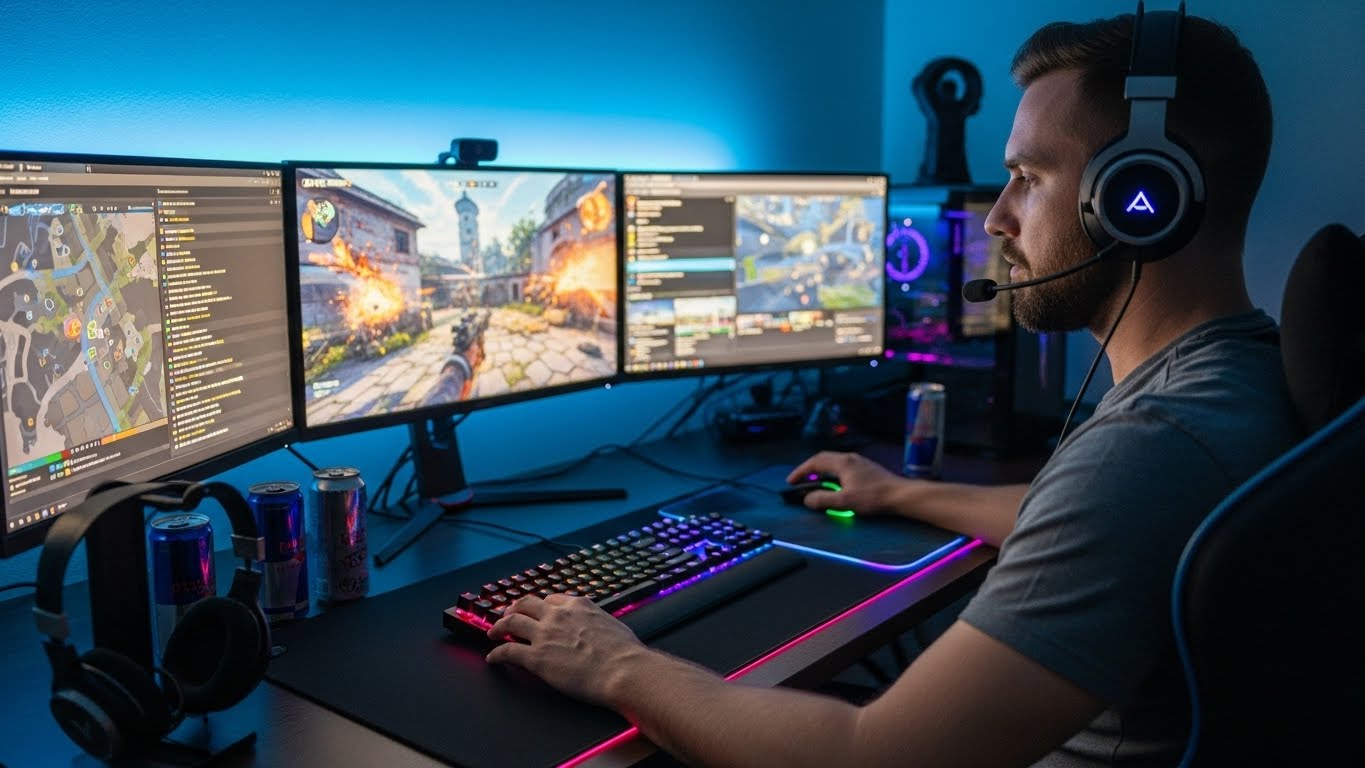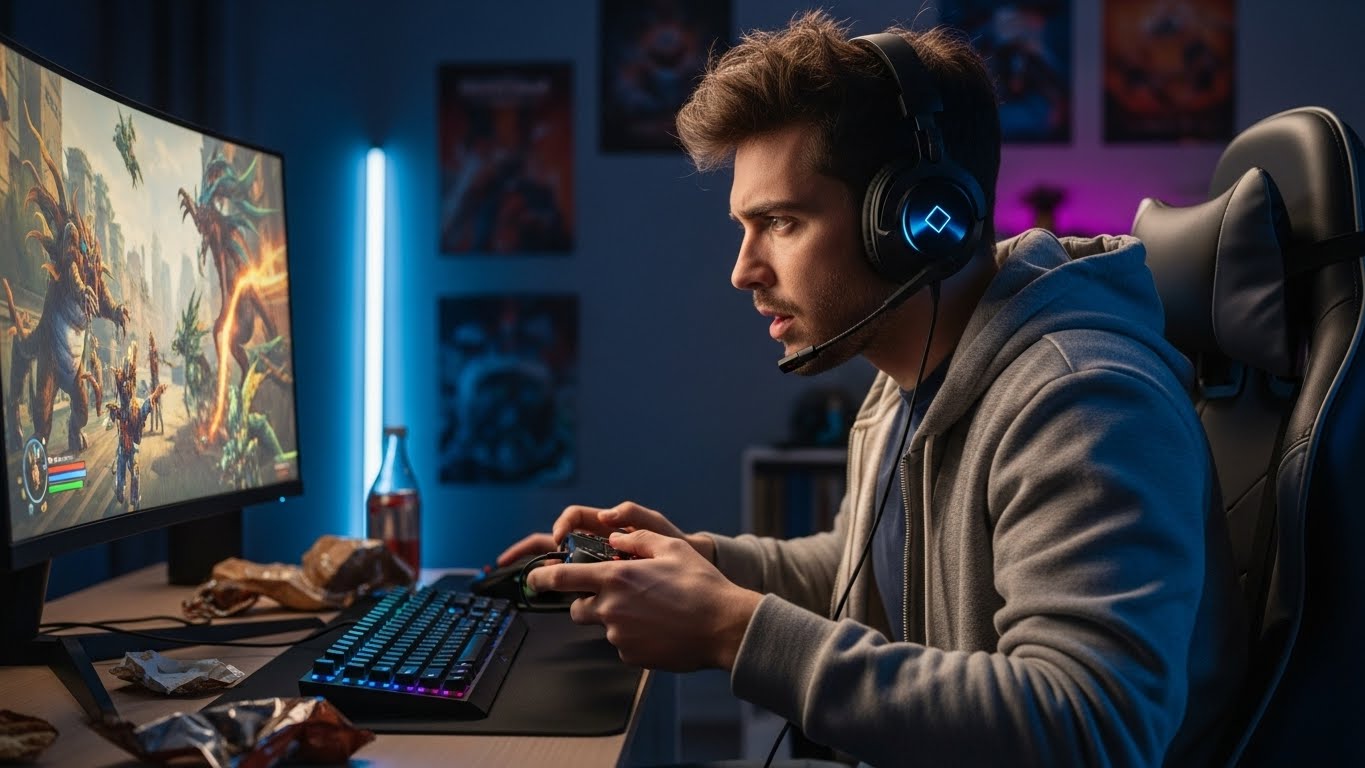
Gaming has evolved from simple pixels on a screen to vast, immersive worlds that connect millions of players across the globe. What began as a hobby for a few passionate programmers and enthusiasts has now become a massive industry, rivaling movies and music combined. The journey of gaming tells a story of creativity, technology, and human imagination — and it continues to shape our culture, economy, and even the way we think.
In this post, we will explore the origins of gaming, how it developed through decades of innovation, its social and psychological impact, the rise of competitive esports, and what the future of gaming might look like.
The Birth of Gaming: Where It All Began
The story of gaming starts in the mid-20th century, when computers were large, room-sized machines used mainly for research and military purposes. The first video games were simple experiments created by scientists who wanted to test the capabilities of early computers. One of the earliest known games was “Tennis for Two,” created in 1958, followed by the famous “Spacewar!” in 1962.
These early creations were simple but groundbreaking. They introduced a new idea — that computers could be used not only for work, but for fun. As technology advanced and computers became more accessible, hobbyists and students began experimenting, creating small games that ran on personal computers or arcade machines.
The late 1970s saw the rise of arcade culture, a phenomenon that would define an entire generation. Games like “Pong,” “Space Invaders,” and “Pac-Man” turned gaming into a social experience. People gathered in arcades to test their reflexes, beat high scores, and challenge friends. The sounds of coins dropping and joysticks clicking became the heartbeat of gaming culture.
The 8-Bit Revolution and the Rise of Consoles
The 1980s marked the dawn of home gaming. Instead of going to arcades, people could now bring the fun home. Companies like Nintendo, Sega, and Atari dominated this era with their consoles. The release of the Nintendo Entertainment System (NES) in 1985 was a turning point. Suddenly, gaming wasn’t just an occasional activity; it became part of daily life.
Games like “Super Mario Bros.,” “The Legend of Zelda,” and “Metroid” became household names. They weren’t just about high scores anymore — they had stories, characters, and worlds that players could explore. The concept of “levels,” “lives,” and “power-ups” entered the global vocabulary of entertainment.
This era also saw the birth of gaming icons. Mario, Link, and Sonic became cultural symbols recognized even by non-gamers. These characters helped shape the identity of entire companies and created a foundation for future storytelling in games.
The 16-Bit Era and the Battle of Titans
As technology improved, the late 1980s and early 1990s brought more powerful consoles with better graphics, sound, and gameplay. The competition between Nintendo and Sega became legendary, often referred to as the “Console Wars.” Each company pushed boundaries to win over players.
Games became more cinematic and complex. The “Super Nintendo Entertainment System” (SNES) delivered vibrant visuals and unforgettable soundtracks, while Sega’s “Genesis” introduced fast-paced action games and edgy marketing. Players were now loyal to brands, arguing endlessly about which console was better.
This rivalry spurred innovation. Developers experimented with storytelling, voice acting, and unique gameplay mechanics. Genres like platformers, role-playing games (RPGs), and fighting games became dominant. Titles such as “Street Fighter II,” “Final Fantasy VI,” and “Sonic the Hedgehog” defined what gaming could achieve creatively and technically.
The 3D Revolution: Entering the Modern Era
The mid-1990s introduced the biggest transformation in gaming — the move from 2D to 3D. With consoles like the Sony PlayStation, Nintendo 64, and Sega Saturn, developers could create full 3D environments. This was the beginning of the modern gaming era.
Games like “Super Mario 64” and “Tomb Raider” demonstrated what was possible in three dimensions. Players could now explore vast open areas instead of moving from left to right. The immersion was deeper, and the worlds felt alive.
The PlayStation, in particular, changed the gaming landscape forever. Sony brought a new level of style, targeting an older audience and emphasizing storytelling and cinematic presentation. Games like “Metal Gear Solid” and “Final Fantasy VII” introduced movie-like experiences that combined gameplay, narrative, and emotional depth.
The Rise of PC Gaming and the Internet Age
While consoles dominated the living room, personal computers quietly built their own gaming empire. The late 1990s and early 2000s were a golden age for PC gaming. Titles like “Half-Life,” “Diablo II,” and “StarCraft” showcased the versatility of the platform.
The internet also revolutionized how people played. Online gaming began to grow with the popularity of multiplayer shooters like “Counter-Strike” and massively multiplayer online role-playing games (MMORPGs) like “World of Warcraft.” Suddenly, players weren’t limited to competing with friends in the same room — they could connect with anyone in the world.
This global connectivity gave birth to new types of communities. Guilds, clans, and forums became virtual meeting places where players shared strategies, stories, and friendships. Online gaming wasn’t just about entertainment anymore; it was about connection and belonging.
The 2000s: Gaming Becomes Mainstream
By the early 2000s, gaming had entered the mainstream. The release of consoles like the PlayStation 2, Xbox, and GameCube brought advanced graphics, realistic physics, and cinematic storytelling. Games like “Grand Theft Auto III,” “Halo,” and “The Elder Scrolls III: Morrowind” set new standards for open-world exploration and narrative complexity.
The PlayStation 2 became the best-selling console of all time, showing that gaming was no longer a niche hobby. It had become a core part of popular culture. Movies, music, and television began referencing gaming, and characters from video games became as iconic as those from films.
This period also marked the rise of handheld gaming. Devices like the Game Boy Advance, Nintendo DS, and PlayStation Portable allowed people to play anywhere, anytime. Gaming became mobile long before smartphones entered the scene.
The HD Generation and the Age of Realism
The arrival of the PlayStation 3, Xbox 360, and Nintendo Wii in the mid-2000s brought gaming into the high-definition era. Graphics became incredibly detailed, and developers focused on realism. Characters had lifelike expressions, and environments looked almost photographic.
Online multiplayer gaming exploded, especially with the introduction of Xbox Live and PlayStation Network. Games like “Call of Duty,” “Halo 3,” and “Gears of War” made competitive online play a mainstream activity. The concept of downloadable content (DLC) and digital purchases changed how games were sold and updated.
Meanwhile, Nintendo took a different approach with the Wii, focusing on motion controls and accessibility. Families and casual players joined the gaming world, playing games like “Wii Sports” and “Mario Kart.” For the first time, gaming bridged the gap between generations.
The Rise of Mobile and Casual Gaming
With the arrival of smartphones in the late 2000s, gaming experienced another massive shift. Mobile games like “Angry Birds,” “Candy Crush,” and “Clash of Clans” brought gaming to billions of people who had never owned a console.
Mobile gaming simplified the experience, making it easy and accessible. You didn’t need expensive hardware or complex setups — just a phone and a few minutes of free time. This accessibility made gaming truly universal.
However, it also changed how games were designed and monetized. Free-to-play models and microtransactions became dominant. Developers began focusing on engagement and retention, leading to debates about addiction and fairness in gaming economies.
Esports and the Rise of the Competitive Scene
As online gaming grew, so did competition. Esports — organized, professional gaming — became one of the fastest-growing entertainment industries in the world. Games like “League of Legends,” “Dota 2,” and “Counter-Strike: Global Offensive” drew millions of viewers to tournaments with massive prize pools.
Players became celebrities, with fan bases as loyal as those of traditional athletes. Esports teams and organizations formed, complete with sponsorships, coaching staff, and training facilities. Platforms like Twitch allowed anyone to watch live matches, further boosting the popularity of competitive gaming.
Esports has proven that gaming is not just play — it’s performance. It combines skill, strategy, teamwork, and creativity. The mental focus and reflexes required rival those in traditional sports, changing perceptions of what it means to be an athlete in the digital age.
The Cultural Impact of Gaming
Gaming is more than entertainment — it’s a cultural force. Video games have influenced art, music, fashion, and even education. Soundtracks from games are performed in symphony halls. Designers take inspiration from game aesthetics. Filmmakers draw from the visual storytelling techniques pioneered in games.
Moreover, games have become powerful tools for storytelling and emotional expression. Titles like “The Last of Us,” “Journey,” and “Life is Strange” explore deep human themes such as love, loss, and morality. These experiences prove that games can evoke emotions as strongly as any film or novel.
Gaming has also fostered creativity in players. With games like “Minecraft,” “Roblox,” and “Dreams,” players can build, design, and share their own creations. Gaming has become both an art form and a platform for artistic expression.
The Psychological and Social Dimensions of Gaming
Gaming affects the brain and behavior in complex ways. Research shows that gaming can improve cognitive skills like problem-solving, coordination, and memory. Strategy and simulation games enhance planning and decision-making abilities, while multiplayer games encourage communication and teamwork.
However, gaming also comes with challenges. Excessive play can lead to addiction or social isolation for some individuals. The key is balance — enjoying games as part of a healthy lifestyle. Responsible gaming practices, such as taking breaks and setting limits, help players maintain that balance.
Socially, games have brought people together. Online gaming communities are diverse and global, transcending language and geography. Many lifelong friendships and even romantic relationships have started through shared gaming experiences. In a world where connection often happens through screens, gaming remains one of the most interactive forms of digital communication.
The Era of Streaming and Cloud Gaming
Today, gaming continues to evolve through streaming and cloud technology. Services allow players to stream games instantly without needing high-end hardware. You can play console-quality games on a phone, tablet, or even a web browser.
Streaming platforms have also turned gaming into a spectator sport. Millions of people watch streamers and content creators who entertain audiences through gameplay, commentary, and humor. This has created entirely new careers and industries around gaming content.
Cloud gaming also promises a future where access matters more than ownership. Instead of buying physical discs or downloading massive files, players can stream any game they want instantly — just like movies or music.
The Future of Gaming: Virtual Reality, AI, and Beyond
Looking ahead, gaming is heading toward even more immersive experiences. Virtual reality (VR) and augmented reality (AR) are redefining how players interact with digital worlds. Games like “Half-Life: Alyx” and “Beat Saber” showcase the power of VR, where you feel physically present in the game environment.
Artificial intelligence is also transforming game design. AI-driven characters and dynamic storytelling can adapt to each player’s choices, creating unique experiences every time. Procedural generation allows for infinite worlds that evolve as you play.
Another major trend is the merging of gaming with the metaverse concept — vast interconnected virtual spaces where people can work, play, and socialize. This vision blurs the line between gaming and reality, suggesting a future where digital worlds become extensions of our daily lives.
Sustainability and inclusivity will also shape the future of gaming. Developers are increasingly focused on creating diverse stories and reducing the environmental impact of game production. Gaming is becoming more accessible, with adaptive controllers and design options that welcome players of all abilities.
Conclusion: Gaming as the Language of the Future
Gaming has come a long way from the blinking dots of “Pong” to the lifelike worlds of modern blockbusters. It is no longer a mere pastime; it is a global language that transcends borders, ages, and cultures. It tells stories, builds communities, and pushes technology forward.
For many, gaming is a form of escape. For others, it is a profession, a social platform, or even a creative outlet. But for everyone, it remains a powerful reminder of what human imagination can achieve when combined with technology.
As we look to the future, one thing is certain — gaming will continue to evolve, adapt, and inspire. It will shape not only how we play but how we live, learn, and connect. The pixels may change, the consoles may upgrade, but the spirit of play — the pure joy of gaming — will always remain.