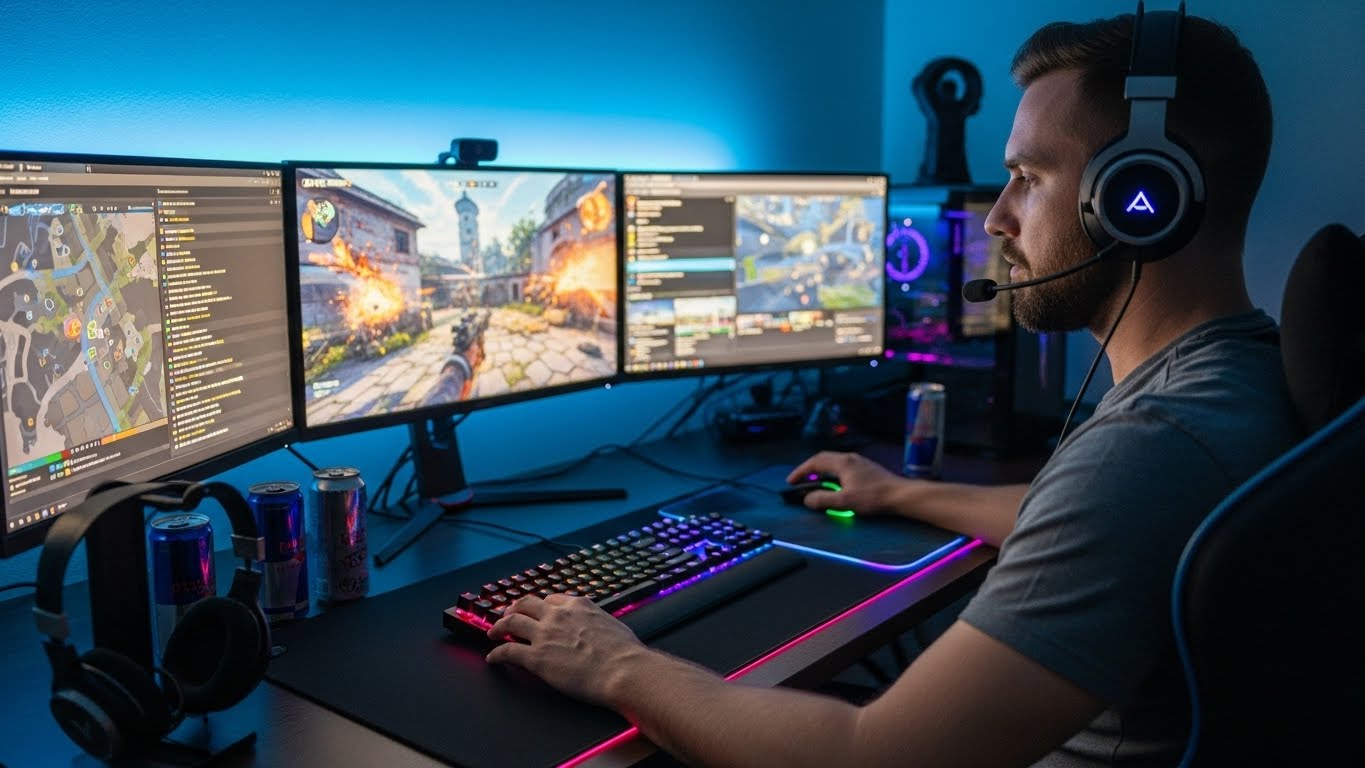
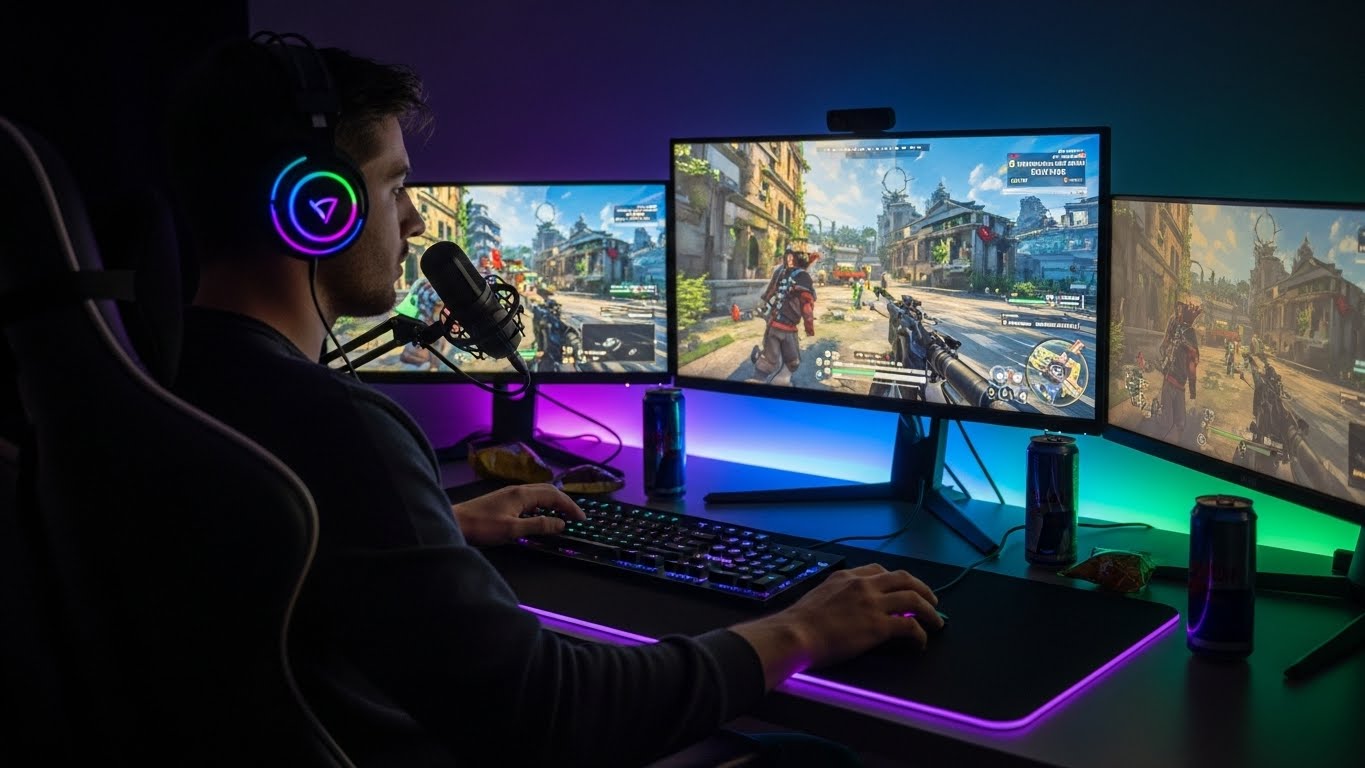
Gaming, once a niche hobby for enthusiasts, has now become a global phenomenon, captivating millions of people from all walks of life. From the humble beginnings of pixelated 2D worlds to the breathtaking immersion of virtual reality, gaming has evolved in ways that were once unimaginable. It’s no longer just about playing games; it’s about experiencing worlds, forging connections, and even shaping modern culture.
In this blog post, we will take a deep dive into the evolution of gaming, explore its impact on society, and look at where the future of gaming might take us.
The Dawn of Gaming: A Pixelated Beginning
The origins of video gaming can be traced back to the 1950s and 60s when the first rudimentary computer games were created for research purposes. However, it wasn’t until the early 1970s that gaming entered the public eye. The release of Pong, a simple tennis-like game created by Atari in 1972, marked the birth of the video game industry as we know it. It was a simple game by today’s standards, consisting of just a ball bouncing between two paddles, but it was revolutionary at the time.
In the late 1970s and early 1980s, arcade games like Space Invaders, Pac-Man, and Donkey Kong captured the attention of millions of people, establishing gaming as a popular form of entertainment. These games were simple, addictive, and offered players an outlet for socializing and competing for high scores. The graphics were limited, the sound was basic, and the gameplay was straightforward, but it was a start—a window into what would become an entertainment empire.
The 16-Bit Era: The Rise of Home Consoles
As technology progressed, so did the sophistication of video games. In the late 1980s and early 1990s, 16-bit consoles like the Super Nintendo Entertainment System (SNES) and the Sega Genesis took gaming to the next level. The games were more colorful, the soundtracks more memorable, and the gameplay more complex. Iconic franchises such as Super Mario, The Legend of Zelda, and Sonic the Hedgehog made their debuts, cementing their place in gaming history.
This period also saw the introduction of multiplayer games in a more meaningful way. Games like Street Fighter II allowed players to face off against each other in real-time, introducing a new form of competitive gaming that would become increasingly important as technology advanced.
The 16-bit era marked a pivotal point where gaming began to be seen not just as a pastime but as an entertainment medium that could rival television and movies in terms of cultural impact.
The 3D Revolution: A New Dimension of Gaming
The 1990s marked the onset of a new era for gaming—3D graphics. The introduction of consoles like the Sony PlayStation, Nintendo 64, and Sega Dreamcast pushed the boundaries of what was possible in terms of visual fidelity and immersive worlds.
The arrival of Super Mario 64 on the Nintendo 64 in 1996 was nothing short of revolutionary. For the first time, players could explore fully 3D environments, where they could move Mario in all directions with ease. This was a game-changer, as it set the stage for future open-world games and the exploration of vast digital landscapes.
At the same time, the PlayStation released legendary titles like Final Fantasy VII, Metal Gear Solid, and Gran Turismo—games that were not only visually impressive but also told complex, emotionally engaging stories. The 3D era also introduced the concept of open-world gaming, where players could explore expansive virtual worlds, interact with NPCs, and shape the narrative to some extent.
This period also witnessed the rise of multiplayer gaming over the internet. Games like Quake, Unreal Tournament, and Warcraft allowed players to connect with others around the globe, giving rise to the concept of online gaming communities.
The Rise of Online Gaming: Multiplayer Takes Over
As internet speeds improved and broadband became more widely available, online multiplayer gaming began to dominate the gaming landscape in the 2000s. With titles like World of Warcraft and Halo 2, gaming no longer required players to be in the same room or even the same country. The growth of massively multiplayer online role-playing games (MMORPGs) allowed players to live out entire lives in virtual worlds.
World of Warcraft, released in 2004, became a cultural phenomenon, attracting millions of players to its fantasy universe. The social aspect of MMORPGs gave rise to dedicated communities, guilds, and online friendships that transcended borders and time zones. This was a pivotal moment in gaming’s history—multiplayer gaming was no longer just an add-on; it was the core experience for millions of gamers.
The early 2000s also saw the rise of competitive gaming, or esports. Games like Counter-Strike, StarCraft, and League of Legends began to feature professional tournaments with huge cash prizes, attracting both players and audiences from around the world. Esports has since exploded in popularity, with some tournaments now attracting millions of viewers and offering sponsorship deals comparable to those in traditional sports.
Gaming Goes Mobile: Pocket-Sized Fun
The 2000s also marked the beginning of mobile gaming. As smartphones became more powerful, games that were once confined to consoles and PCs found their way into the hands of millions of people worldwide. Simple games like Angry Birds, Candy Crush, and Clash of Clans became global hits, proving that you didn’t need a dedicated gaming device to enjoy video games.
Mobile gaming brought games to people who had never considered themselves gamers. It allowed casual players to dip in and out of games, leading to the rise of the “freemium” model, where games were free to play but offered in-app purchases. This model revolutionized the industry, making games more accessible while also generating massive revenue.
The success of mobile gaming has led to the development of powerful mobile platforms, such as the Nintendo Switch, which allows users to play console-quality games on the go. Mobile gaming has become a key pillar of the overall gaming ecosystem, with titles such as Fortnite and PUBG Mobile bridging the gap between console and mobile experiences.
Virtual Reality and Augmented Reality: The Next Frontier
As we enter the 2020s, gaming is undergoing yet another transformation with the rise of virtual reality (VR) and augmented reality (AR). These technologies promise to immerse players in ways never before seen.
With the advent of devices like the Oculus Rift, PlayStation VR, and HTC Vive, players can now experience games as though they are physically inside them. Whether it’s swinging a sword in a fantasy world or exploring alien landscapes, VR technology allows players to interact with the game world in a much more intuitive and immersive manner. Games like Beat Saber and Half-Life: Alyx showcase the potential of VR to create engaging, immersive experiences.
In addition to VR, AR games like Pokémon GO have taken the gaming world by storm. By blending the digital and physical worlds, AR creates entirely new forms of gameplay. Players can hunt for Pokémon in their own neighborhoods or participate in location-based challenges, blending real-world exploration with the fun of video games.
The technology is still in its early stages, but VR and AR have the potential to completely reshape the way we think about gaming. Instead of simply playing a game on a screen, we could soon find ourselves inside it, interacting with characters and environments in ways we can only dream of today.
The Future of Gaming: AI, Cloud Gaming, and Beyond
Looking ahead, the future of gaming is incredibly exciting. One of the most promising developments is cloud gaming, where games are streamed from remote servers rather than being run on local hardware. Services like Google Stadia, Xbox Cloud Gaming, and NVIDIA GeForce Now are already allowing players to enjoy high-quality games on devices that would otherwise be incapable of running them. Cloud gaming could democratize access to high-end gaming experiences, making it possible to play the latest AAA titles on smartphones, tablets, and even low-end PCs.
Another area to watch is artificial intelligence (AI). AI is already being used to create more realistic non-playable characters (NPCs) that can respond to player actions in a more dynamic way. As AI continues to improve, we can expect games to feature even more complex, reactive worlds where every action has a consequence.
The rise of AI-generated content could also change the way games are developed. Rather than creating every asset manually, AI could help generate vast, procedurally generated worlds, making it possible to create experiences that feel endless and unique to each player.
Conclusion: Gaming as a Cultural Force
From its humble, pixelated beginnings to the immersive, interactive experiences of today, gaming has come a long way. It has evolved from a simple pastime to a dominant form of entertainment, influencing everything from music to movies to social media. With the rise of new technologies like VR, AR, and AI, the future of gaming promises even more exciting innovations.
Whether you’re a casual mobile gamer or a hardcore PC enthusiast, the world of gaming continues to offer endless opportunities for exploration, entertainment, and connection. As technology advances and new platforms emerge, one thing is clear: gaming is here to stay, and it will only continue to grow in both complexity and cultural significance.