
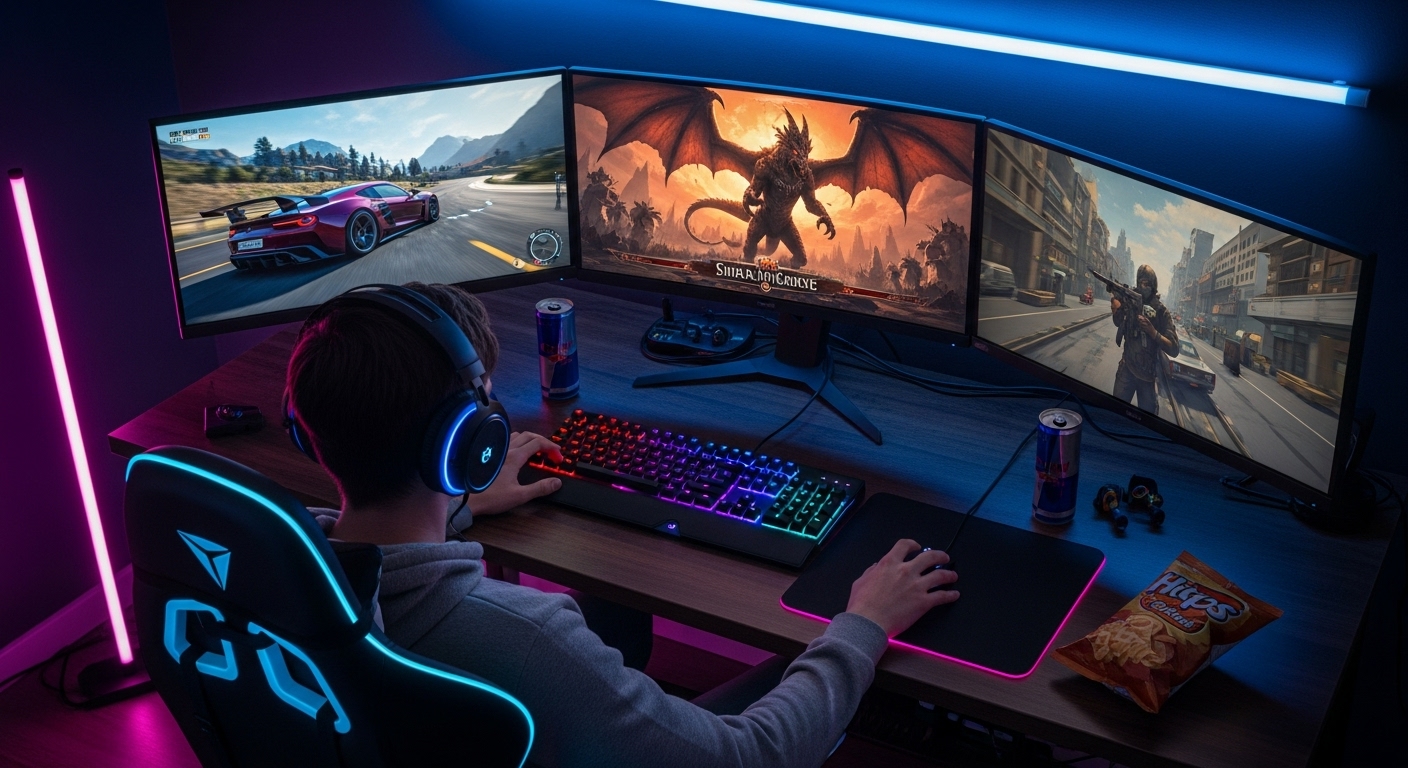
In recent years, gaming has evolved far beyond its humble beginnings. What started as a pastime for the few has transformed into a global cultural phenomenon, bringing together people from all walks of life to engage in a shared experience. From intense competitive multiplayer games to immersive single-player adventures, the gaming world offers something for everyone. In this blog, we’ll take a deep dive into the world of gaming—exploring its growth, the reasons behind its popularity, and the positive impacts it has on individuals and society as a whole.
The Evolution of Gaming: From Arcades to Virtual Realities
Gaming has come a long way from its origins in the 1970s. The first commercially successful video game, Pong, introduced the world to the concept of digital entertainment. It was simple—just two paddles and a bouncing ball—but it sparked a new wave of innovation. The late 1970s and early 1980s saw the rise of arcade games like Space Invaders, Pac-Man, and Donkey Kong, which became cultural icons in their own right.
As technology advanced, so did the complexity of games. In the 1990s, home consoles like the Super Nintendo Entertainment System (SNES) and Sega Genesis brought gaming into living rooms across the globe. The 3D revolution arrived in the mid-1990s with the release of the Sony PlayStation and Nintendo 64, which allowed players to experience environments that were richer and more immersive than ever before. As the years went on, advancements in graphics, storytelling, and gameplay mechanics led to the rise of open-world games, real-time strategy games, and multiplayer experiences that could be enjoyed online.
Today, gaming has reached new heights with the advent of virtual reality (VR), augmented reality (AR), and cloud gaming. These technologies have pushed the boundaries of immersion, allowing players to step into fully realized digital worlds and experience games in ways that were once unimaginable.
The Appeal of Gaming: Why People Play
Gaming is more than just a hobby; for many, it’s a form of escape, a creative outlet, and even a social platform. But what exactly is it that draws millions of people around the world to pick up a controller, mouse, or keyboard and dive into virtual worlds?
Entertainment and Escapism
One of the main reasons people turn to video games is the sheer entertainment value they offer. Games provide an immersive escape from the stresses of everyday life. Whether it’s exploring a fantasy realm, solving complex puzzles, or engaging in high-stakes combat, video games allow players to experience adventures and stories that go beyond the limits of reality. For many, it’s an opportunity to live out fantasies, whether it’s becoming a hero in an epic RPG or commanding a fleet in a space strategy game.
Social Connection and Community
In today’s interconnected world, gaming has become a powerful tool for socialization. Multiplayer games like Fortnite, League of Legends, and Call of Duty have turned gaming into a social experience, where players can connect with friends and strangers from all over the world. Online gaming communities have flourished, with gamers creating lasting friendships and even participating in competitive tournaments. Many people find a sense of belonging in these communities, where shared interests and a love for gaming form the basis of connections.
Competitive Spirit and Achievement
For those who crave competition, gaming offers a platform for testing skill and strategy. Esports, in particular, has risen to prominence, with professional players earning sponsorships and competing for millions in prize money. Games like Dota 2, Counter-Strike, and Overwatch have brought a level of competition akin to traditional sports. The adrenaline rush of winning a match or securing a high rank in a game can be incredibly rewarding, providing players with a sense of accomplishment and recognition.
Intellectual Stimulation
While gaming may seem like a purely recreational activity, many games actually require problem-solving, strategy, and critical thinking. Puzzle games like The Legend of Zelda, Portal, and The Witness challenge players to think creatively and solve complex problems. Strategy games like Civilization and StarCraft demand long-term planning and tactical decision-making. For some, the intellectual stimulation provided by these games is just as important as the entertainment value.
The Cultural Impact of Gaming
Gaming is no longer a niche interest—it’s a mainstream cultural force. From movies and TV shows to music and art, the influence of gaming can be seen in many aspects of modern culture. Game developers, artists, and musicians have created works that rival the best of any other medium.
Games as Art
One of the most debated topics in gaming is whether or not video games can be considered art. As games have become more sophisticated, with elaborate narratives, stunning visuals, and evocative soundtracks, many argue that they are a legitimate form of artistic expression. Games like The Last of Us, Journey, and Red Dead Redemption 2 tell deeply emotional stories that resonate with players on a personal level. The way these games combine visual design, storytelling, and gameplay mechanics can evoke powerful emotions, blurring the lines between interactive entertainment and traditional art forms.
The Rise of Gaming in Pop Culture
Gaming has also permeated pop culture in ways that were once unimaginable. Iconic characters like Mario, Sonic, and Master Chief have become household names, appearing in films, television shows, and comics. Gaming conventions like E3 and PAX have become major events, drawing in fans from all over the world to celebrate their love of games and meet the creators behind their favorite titles. Major gaming companies have also partnered with movie studios to adapt games into blockbuster films, further cementing gaming’s place in the global cultural zeitgeist.
Music and Soundtracks
Video game music has gained recognition for its complexity and emotional depth. Composers like Nobuo Uematsu (known for his work on the Final Fantasy series) and Austin Wintory (known for Journey) have created soundtracks that rival those of Hollywood movies. The music in video games enhances the player’s experience, setting the tone and mood for different moments in the game. Many fans even enjoy listening to video game soundtracks outside of the games themselves, showcasing how deeply integrated gaming music is into modern entertainment.
The Future of Gaming: What’s Next?
As technology continues to advance, the future of gaming looks incredibly exciting. We are on the cusp of seeing even more innovations that will shape the way we play, connect, and experience games.
Virtual Reality and Augmented Reality
Virtual reality (VR) is one of the most promising areas of gaming innovation. VR headsets like the Oculus Rift and PlayStation VR are already allowing players to fully immerse themselves in digital worlds. In the future, we can expect even more refined VR experiences, where the line between reality and the game world becomes almost indistinguishable. Augmented reality (AR), which overlays digital elements onto the real world, is another area to watch. Games like Pokémon GO have already demonstrated the potential of AR gaming, and it’s likely that more AR games will emerge in the coming years.
Cloud Gaming and Accessibility
Cloud gaming is another technological breakthrough that is set to revolutionize the industry. Services like Google Stadia and Xbox Cloud Gaming allow players to stream games directly to their devices without the need for high-end hardware. This makes gaming more accessible to people who may not have the latest consoles or powerful PCs. As cloud gaming improves, it could help eliminate barriers to entry and make gaming more inclusive for everyone.
AI and Procedural Generation
Artificial intelligence (AI) and procedural generation are also changing the way games are designed. AI can be used to create more dynamic and responsive non-playable characters (NPCs), while procedural generation allows for vast, ever-changing worlds that are different every time a player explores them. Games like No Man’s Sky are already leveraging these technologies to create immersive, endless worlds, and we can expect even more advancements in this area.
The Positive Impacts of Gaming
While gaming is often seen as a form of entertainment, it can also have positive effects on personal development and society as a whole. Research has shown that gaming can improve cognitive skills, enhance hand-eye coordination, and even reduce stress.
Cognitive Benefits
Studies have demonstrated that playing action games can improve players’ attention to detail, spatial awareness, and decision-making skills. Puzzle games, strategy games, and even certain role-playing games can boost problem-solving abilities and creativity. For example, games that require players to think critically or plan their moves carefully can enhance cognitive flexibility and improve overall mental agility.
Social and Emotional Benefits
Gaming can also provide social and emotional benefits. Multiplayer games create opportunities for teamwork, communication, and collaboration. These games often require players to work together to achieve common goals, which can foster a sense of community and belonging. Moreover, the emotional connection to characters and narratives can help players develop empathy and emotional intelligence.
Conclusion
Gaming is much more than just a pastime. It is a dynamic, evolving medium that continues to push the boundaries of technology, entertainment, and culture. From its humble beginnings in arcades to the immersive virtual worlds of today, gaming has become an integral part of modern life, offering something for everyone. Whether it’s for entertainment, social connection, intellectual stimulation, or competition, gaming has the power to bring people together, spark creativity, and even improve cognitive and social skills.
As technology continues to advance, we can only imagine the incredible experiences that await players in the future. What is clear, however, is that gaming is here to stay—and it will continue to shape our world in ways we may not yet fully understand.