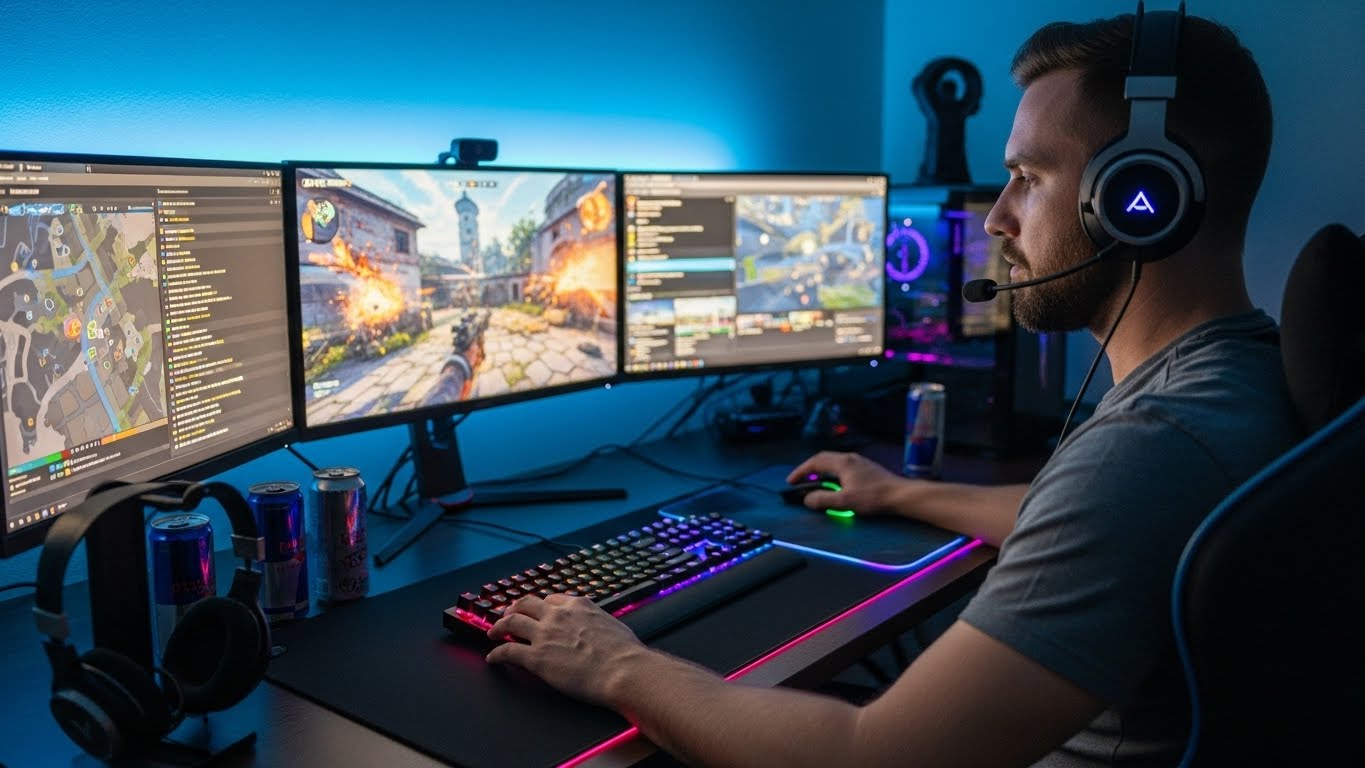

Gaming is no longer just a pastime; it has evolved into a multi-billion-dollar industry that influences culture, technology, and even social interaction. From humble beginnings as simple pixelated adventures to immersive worlds powered by cutting-edge technology, gaming has transformed the way people spend their free time. In this blog post, we will explore the evolution of gaming, the psychological and social impacts, the rise of competitive gaming, and the technological innovations that continue to shape this dynamic industry.
The Evolution of Gaming
The history of gaming dates back to the early days of computer and console technology. What began as simple experiments in coding and electronics has grown into a complex ecosystem of games spanning multiple genres and platforms. Early games were often limited by hardware constraints, resulting in simple graphics and gameplay mechanics. Titles like Pong, Space Invaders, and Pac-Man captured the imagination of players by offering interactive experiences that were previously unimaginable.
As technology advanced, so did the complexity of games. The 1980s and 1990s saw the rise of home consoles and personal computers, making gaming accessible to a broader audience. The introduction of titles with compelling narratives, such as The Legend of Zelda and Final Fantasy, elevated gaming from a mere hobby to a storytelling medium. These games showcased that digital experiences could evoke emotions and immerse players in imaginative worlds.
The 21st century brought online connectivity, multiplayer experiences, and mobile gaming, creating a global network of players and communities. Games like World of Warcraft, Fortnite, and Minecraft became social platforms in their own right, allowing players to connect, collaborate, and compete across continents. Today, gaming continues to innovate with virtual reality, augmented reality, and cloud gaming, promising even more immersive and accessible experiences.
Gaming as a Cultural Phenomenon
Gaming is not just entertainment; it is a cultural phenomenon that reflects and influences society. Characters, stories, and even game mechanics often draw inspiration from literature, history, and mythology, while simultaneously shaping popular culture. Iconic characters such as Mario, Lara Croft, and Master Chief have become symbols recognized beyond the gaming community.
Gaming has also influenced other forms of media, including films, television, music, and fashion. Soundtracks from video games are now performed in concert halls, and cinematic storytelling in games rivals that of major Hollywood productions. The aesthetic and themes of games often inspire clothing lines, art, and fan communities, demonstrating that gaming is more than just a hobby—it is a lifestyle.
Moreover, gaming fosters creativity and imagination. Sandbox games allow players to design and build their own worlds, while narrative-driven titles encourage critical thinking and problem-solving. In many ways, games serve as interactive art, offering experiences that are shaped by player choices and creativity.
The Social and Psychological Impact of Gaming
Contrary to outdated stereotypes, gaming can offer numerous cognitive and social benefits. Studies have shown that certain types of games improve memory, attention, and spatial reasoning. Puzzle games, strategy games, and role-playing games challenge players to think critically, plan ahead, and solve complex problems. These skills are transferable to real-life situations, from decision-making to multitasking.
Socially, gaming has created communities that transcend geographical boundaries. Multiplayer and online games enable players to communicate, collaborate, and form friendships that might not have been possible otherwise. These communities often foster teamwork, leadership, and communication skills.
Gaming can also serve as a healthy outlet for stress relief and emotional expression. Engaging in immersive gameplay allows players to escape daily pressures, explore new perspectives, and experience emotions in a safe environment. While moderation is essential, when approached responsibly, gaming can contribute positively to mental health and well-being.
The Rise of Competitive Gaming
Competitive gaming, or esports, has transformed gaming into a professional and lucrative industry. What started as casual competitions among friends has evolved into a global phenomenon with professional teams, tournaments, and sponsorships. Games like League of Legends, Dota 2, and Counter-Strike: Global Offensive draw millions of viewers and offer prize pools that rival traditional sports.
Esports has created new career paths, from professional players and coaches to content creators, commentators, and event organizers. Universities and schools are even offering scholarships for esports athletes, recognizing the skill, dedication, and strategic thinking required to excel at this level.
The competitive nature of esports has also fueled technological advancements in hardware and software, pushing developers to create more responsive, visually stunning, and immersive games. Esports tournaments are celebrated with the same enthusiasm as traditional sports events, complete with live audiences, broadcasts, and fan engagement.
Gaming and Technology Innovation
Gaming has always been at the forefront of technological innovation. The demand for realistic graphics, immersive worlds, and seamless online connectivity has driven advancements in computer hardware, graphics cards, and network infrastructure. Virtual reality (VR) and augmented reality (AR) are prime examples of how gaming pushes the boundaries of technology.
VR games transport players into fully interactive 3D environments, offering experiences that were previously the realm of science fiction. AR games blend the virtual and real worlds, allowing players to interact with their surroundings in creative and innovative ways. Cloud gaming, on the other hand, removes the limitations of hardware by streaming high-quality games directly to devices, making gaming more accessible than ever before.
Artificial intelligence in gaming has also seen significant advancements. NPCs (non-player characters) are now capable of adaptive behavior, learning from player actions, and creating dynamic challenges. Procedural generation techniques allow for expansive worlds that evolve uniquely for each player, ensuring that no two experiences are identical. These innovations are not only enhancing gameplay but also shaping other industries, including simulation training, healthcare, and education.
The Future of Gaming
The future of gaming promises even greater innovation and integration into daily life. Advances in AI, cloud technology, and immersive devices will redefine what is possible in interactive entertainment. We can expect games that are more personalized, adaptive, and capable of creating emotionally resonant experiences tailored to individual players.
Cross-platform gaming will continue to break down barriers, enabling seamless play across consoles, PCs, and mobile devices. Social interaction within games will deepen, with virtual worlds serving as spaces for work, education, and collaboration, in addition to entertainment.
Moreover, ethical considerations in gaming, such as inclusivity, accessibility, and responsible monetization, will play an increasingly important role in shaping the industry. Developers are recognizing the importance of creating experiences that are welcoming and engaging for a diverse audience, ensuring that gaming remains a positive and enriching part of modern culture.
Conclusion
Gaming has evolved far beyond its origins as a simple form of entertainment. It has become a cultural, social, and technological force that shapes the way people interact, learn, and experience stories. With advances in technology, the rise of esports, and the continued growth of online communities, gaming is more influential than ever.
Whether as a medium for storytelling, a tool for cognitive development, or a competitive arena for global audiences, gaming has cemented its place in modern society. Its impact reaches far beyond the screen, influencing culture, technology, and even human connection. As the industry continues to evolve, one thing remains certain: gaming will continue to push boundaries, inspire creativity, and connect people across the world in ways previously unimaginable.